
Today, the ACLU Foundation of Northern California, the ACLU Foundation of San Diego and Imperial Counties, and Electronic Frontier Foundation filed an amicus brief in Guillermo Mata v. Digital Recognition Network Inc.
Our brief argues that the California Supreme Court should review the case because the Court of Appeal wrongly added an “actual harm” requirement to the state’s automated license plate reader law (“SB 34”). SB 34 and the California Constitution’s right to privacy are meant to protect people against the mass collection of personal information — the very harm caused by automated license plate readers (“ALPRs”).
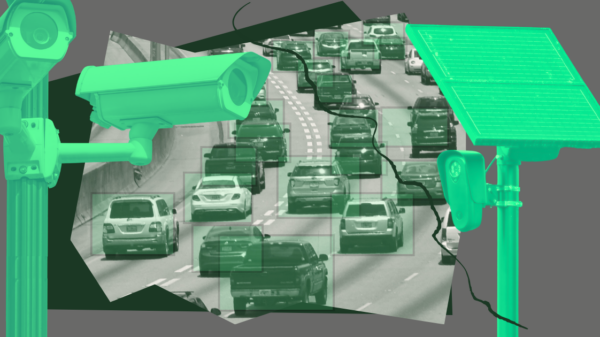
ALPRs are not normal cameras. They are a dragnet system of networked surveillance devices that collect a massive amount of personal information because they record and track every car regardless of whether the car is connected to suspected wrongdoing. AI algorithms then analyze and catalog the make, model, color, license plate number, and even bumper stickers on every car, and often images of drivers and occupants. That information is stored in massive searchable databases where it is retained, sometimes for years.
The Court of Appeal’s new requirement would undermine the purpose of SB 34 and the California constitutional right to privacy the law built upon. We asked the California Supreme Court to review the case to clarify that license plate readers cause enough harm for people to bring lawsuits under SB 34.