
Privacy and Technology
The ACLU of Northern California defends the right to privacy guaranteed by the California Constitution and fights for social justice in the digital age. We work to stop dangerous government surveillance, eliminate bias in artificial intelligence and other emerging technologies, and restrict the online collection and use of our personal data.


The Latest
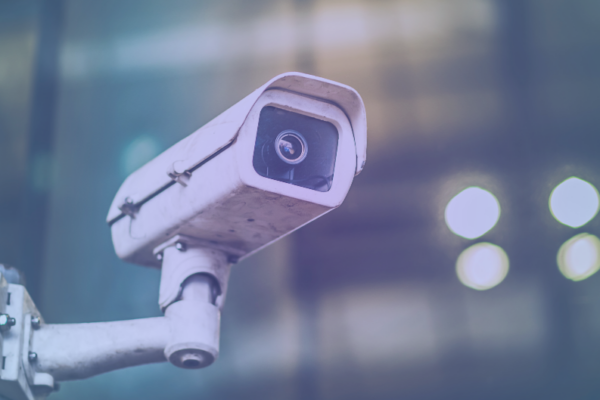
ACLU California and EFF Ask California Supreme Court to Recognize the Harm of License Plate Surveillance
The Court of Appeal’s new requirement would undermine the purpose of SB 34 and the California constitutional right to privacy.
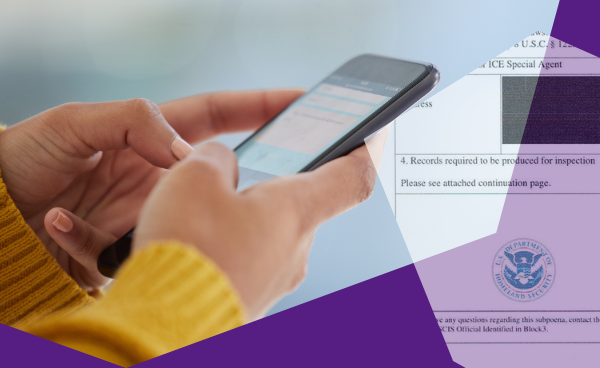
When the Government Demands Info About Your Online Accounts
How to fight an administrative subpoena that directs a technology company to turn over information about you and your online accounts.

ACLU Settles Lawsuit with Sonoma County, Curbing Invasive Runaway Drone Surveillance Program that Trampled People’s Privacy
ACLU Settlement Victory for Privacy Protections
Issue Areas:
Privacy and Technology
Court Cases:
Schmitz, et al. v. Permit Sonoma, et al.
Cases, Campaigns & Legislation
Jun 10, 2026
ACLU v. U.S. Immigration and Customs Enforcement, et al.
In November 2025, the ACLU and the ACLU of Northern California filed a Freedom of Information Act (FOIA) request seeking transparency about the Department of Homeland Security’s policies and practices related to people filming immigration and law enforcement activity.
May 4, 2026
John Doe v. Markwayne Mullin
The ACLU Foundation of Northern California and the ACLU of the District of Columbia sued the U.S. Department of Homeland Security (DHS) over its unlawful attempt to obtain from Google the personal and location information of a Canadian citizen who has posted content critical of the Trump administration online.
This case is among a large number of instances of social media critics who have been targeted by DHS. Since the start of the second Trump administration, social media platforms have received hundreds of similar government demands for information designed to chill speech the government doesn’t like. Our lawsuit asks the court to rule that DHS is exceeding its legal authority by demanding vast swaths of personal information about the plaintiff, including his name, where he lives, extensive information about his physical movements, and detailed records about the websites he visits and the people he communicates with online.
On his social media accounts, the plaintiff, John Doe, who uses a pseudonym to protect his privacy and family, regularly posts strongly worded criticisms of President Trump and his policies. In February, DHS issued an administrative demand to Google to release his personal information shortly after he posted online criticism of the killings of Renee Good and Alex Pretti by federal agents in Minneapolis.
The attempt to force Google to turn over information about Mr. Doe far exceeds DHS’s legal authority, which the agency issued without any involvement from a court, citing a customs enforcement law. Mr. Doe, a Canadian citizen who resides in Canada, has not entered the U.S. since 2015.
The ACLU of Northern California, the ACLU of Pennsylvania, and the ACLU national organization have filed three other cases challenging similar abuses, but DHS withdrew those subpoenas before a judge could rule on their legality.
This lawsuit, filed in the Northern District of California, goes a step further than previous challenges. It asks the court to not only invalidate this summons, but also make clear that the government may not use its customs enforcement authority to attempt to identify and intimidate its critics.
Jan 20, 2026
SIREN, et al. v. City of San Jose, et al.
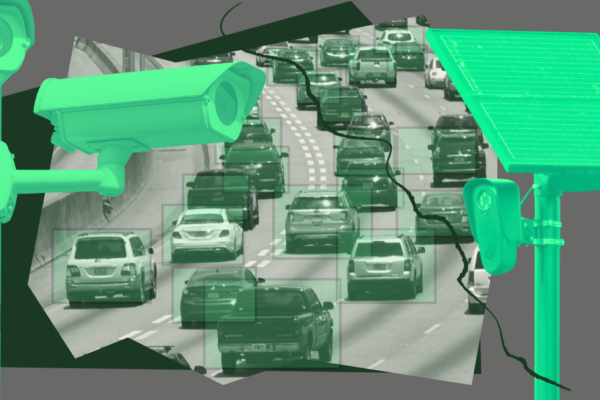
The ACLU of Northern California and the Electronic Frontier Foundation filed suit in Santa Clara County Superior Court against the City of San Jose and others to challenge San Jose police officers’ practice of searching for location information collected by automated license plate readers (ALPRs) without first getting a warrant.
Jan 21, 2026
San Francisco Tenants Union, et al. v. Smart Rent, et al.
The ACLU’s lawsuit in San Francisco Superior Court seeks to protects tenants' privacy rights from landlords who force renters to allow AI-powered surveillance technology in their homes. In multiple residential buildings across San Francisco, landlords have forced tenants to accept so-called “smart home” systems that monitor their comings and goings and other behavior. They're using tenants’ personal information to track them, potentially even profiling their behavior with AI tools built specially for landlords.
Stay Informed
Sign up to be the first to hear about how to take action.
By completing this form, I agree to receive occasional emails per the terms of the ACLU’s privacy statement.
By completing this form, I agree to receive occasional emails per the terms of the ACLU’s privacy statement.