
ACLU Settles Lawsuit with Modesto Over Mask Ban
November 16, 2026 11:00 am

MODESTO—As part of a settlement with the ACLU of Northern California, Modesto will eliminate a ban on face coverings and bike helmets at protests and allow journalists to wear personal safety gear when covering public demonstrations.
These changes to the city’s ordinance preserve the right to anonymity, shielding demonstrators from doxxing, retaliation, and invasive government surveillance. The City Council will consider the proposed amendments during a special meeting at 5 p.m. today.
“This settlement protects free speech and free expression in Modesto. It ensures that journalists can cover protests safely and that people can protest peacefully without fear of being arrested, surveilled, or doxxed,” said Chessie Thacher, senior supervising attorney at the ACLU of Northern California. “It’s a shame that the city wasted hundreds of thousands of taxpayer dollars fighting this commonsense result.”
The ACLU sued Modesto and the police chief in March on behalf of three individual plaintiffs and the Pacific Media Workers Guild, the union representing local journalists. The lawsuit argued that the ordinance stifled the public’s rights to free speech and free assembly under both state and federal law and infringed journalists’ rights to report on protests. The plaintiffs also alleged that the ordinance violated federal and state due process protections by including ambiguous exemptions for religious beliefs, medical necessity, and costumes with “an expressive message.”
Under the old ordinance, wearing a face covering, carrying a bike helmet, or bringing a padded vest or gas mask to a protest had been a misdemeanor punishable by up to six months in jail. Although the ban on most safety gear remains in place, journalists are exempt.
Plaintiff Angel Flores was one of five people arrested for wearing a face covering at an ICE Out rally in June 2025 and spent about 12 hours in custody. Although the city attorney ultimately did not file criminal charges against him, Flores remains traumatized by the experience.
“I went to my first protest to speak out against ICE brutality and ended up being silenced,” said Flores, a former Modesto school bus driver who has since moved out of state. “For a long time after my arrest, protesting felt too risky. I’m glad that Modesto has dropped the mask ban so no one else will have to go through what I did just for raising their voice and standing up for the Latino community.”
After last year’s ICE Out arrests, plaintiff Julissa Ruiz Ramirez felt she had to take a step back from protesting in Modesto.
“I didn’t want to show my face because I’ve been doxxed and threatened before, but I also didn’t want to end up in jail for wearing a kufiya around my head,” said Ruiz Ramirez, co-founder of the Central Valley Black, Indigenous, and People of Color Coalition. “I look forward to once again exercising my right to protest and participating in demonstrations against mass deportations, ICE, and the war in Gaza now that Modesto is no longer forcing me to choose between my personal safety and free speech.”
Under state law, reporters can remain at a protest after police give a dispersal order, but Modesto’s restrictions on protective equipment put them at risk of physical harm.
“Journalists go to protests to document what happens so that the public can see it for themselves, and basic protective gear is what lets reporters stay on the scene and keep documenting events when things get chaotic,” said Annie Sciacca, president of the Pacific Media Workers Guild. “Under Modesto’s old ordinance, a journalist who packed a helmet or a respirator for an assignment could have been arrested just for trying to stay safe on the job. Reporters and photojournalists should not have to choose between their own safety and telling their community what’s happening. We’re glad Modesto has fixed that.”
In June, the U.S. District Court for the Eastern District of California blocked enforcement of the ordinance while the lawsuit proceeded. Modesto dismissed its appeal of the court’s ruling earlier this month.
Related Issues
Related Content
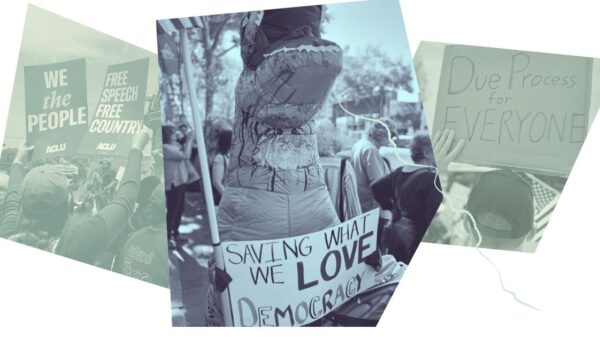
ACLU Sues Modesto Over Unconstitutional Mask Ban

Stay Informed
Sign up to be the first to hear about how to take action.
By completing this form, I agree to receive occasional emails per the terms of the ACLU’s privacy statement.
By completing this form, I agree to receive occasional emails per the terms of the ACLU’s privacy statement.