


A domestic violence survivor in California seeking a restraining order against their abuser must often first pay hundreds, if not thousands of dollars, to hire a private court reporter.
If they can’t afford to do so, they typically won’t be able to get a verbatim transcript of what was said during their court hearings since state law currently prohibits electronic recording of most civil court hearings. Without this critical record, they have no real chance of mounting a successful appeal in their case — unlike someone in similar circumstances who has the financial means to hire a court reporter.
Civil cases can be just as life-altering as criminal actions. Besides restraining orders, they include child custody cases, conservatorships, guardianships, and requests for civil protections from domestic and workplace harassment. These are instances where the state could take something precious away from you, including your liberty and family.
Someone’s ability to get justice should never depend upon their ability to pay for their own court recorder. But for most people the cost is simply beyond their means. A private court reporter can cost a staggering $3,300 per day. Low- and even moderate-income Californians are all too often left without records of their cases, even when the rights that they most cherish are at stake.
The ACLU of Northern California has long fought to protect the civil rights of all Californians, including fighting for equal access to justice. To that end, we filed an amicus brief at the state’s high court to support the Family Violence Appellate Project and Bay Area Legal Aid in their effort to ensure that all Californians, regardless of their financial status, can access a verbatim transcript in their civil case. The California Supreme Court is expected to hear argument in Family Violence Appellate Project, et. al v. Superior Courts sometime this spring.
We are calling on the state’s high court to permit electronic recording in instances where there isn’t a court reporter available.
Our amicus brief explains that the wealth-based disparities in accessing a trial court record violate the California Constitution’s equal protection clause.
Repeal the Ban on Electronic Recording
California is one of the few states in the U.S. that bans electronic recording of most civil court proceedings.
At the same time, the state faces a decades-long and worsening court reporter shortage, in large part because fewer people are entering the profession. That coupled with the ban on electronic recording meant that in more than 200,000 civil court cases in 2023 alone, the people in the case had no access to a court transcript, effectively foreclosing their ability to appeal.
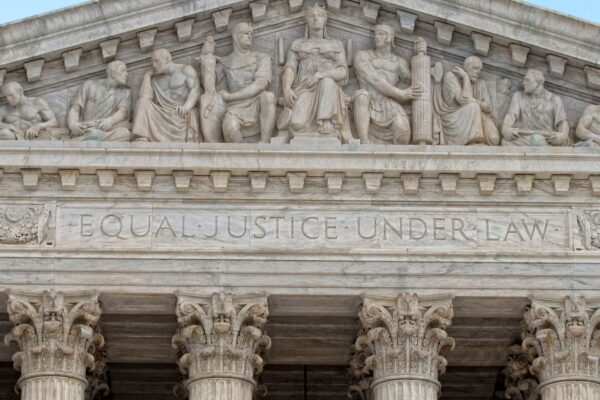
A review by the court of appeals is a basic procedural safeguard. It is essential for correcting legal errors in the lower courts and helping guarantee equal justice for all Californians.
California has the roadmap needed to address this inequity. Electronic recording is a well-tested solution, and in fact, it is used in two-thirds of states as well as in federal courts. Many California state courts are already equipped to facilitate electronic recording if a court reporter is unavailable. Some superior courts in California have chosen to allow electronic recording in certain civil cases despite the state ban if a judge determines that a fundamental right is at stake.
But under the current patchwork system, access to justice depends on geography or even the individual judge presiding over their case. Californians who live in the wrong county — or draw the wrong courtroom — risk having their cases go unrecorded. Leaving constitutional rights to chance is not acceptable.
ACLU Advocacy at California Supreme Court
The ACLU of Northern California has a longstanding commitment to supporting lawsuits that seek to advance and protect civil liberties and civil rights in California. Our appellate work at the California Supreme Court is an important venue for achieving this goal. The State Supreme Court is the highest court in California and the final arbiter of the state constitution and statues. Rulings there set precedent for the largest judicial system in the country, which hears some 6 million cases each year — much larger than the federal court system. And, as the U.S. federal courts retreat from the judiciary’s traditional role as a check on unlawful government action, California’s Supreme Court takes on even more importance in upholding our rights.
A key focus of our appellate work is advancing the fundamental right of equal access to the courts and legal system. For example, our ACLU of Northern California appellate team filed legal briefs at the California Supreme Court explaining why California’s taxpayer standing doctrine — which allows ordinary taxpayers to bring lawsuits against wasteful and illegal government actions — is a critical tool that public interest organizations and activists use to hold the governments accountable to the public. Without taxpayer standing, some important cases that we and others have brought against state prisons, district attorneys, and other state entities would be nearly impossible.
Among all the cases we support, one principle remains constant: constitutional rights are only meaningful if they can be enforced.
The ACLU of Northern California remains committed to dismantling barriers to access justice, opening courthouse doors, and ensuring that our rights are more than words on paper.