
News & Commentary
Forget About Calling A Lawyer Or Anyone at All if You’re in an Immigration Detention Facility
This piece originally appeared at The Huffington Post.
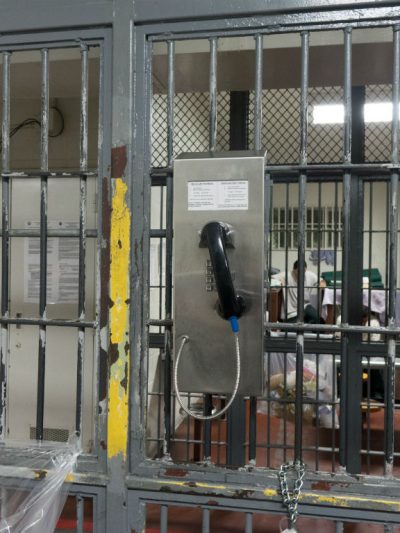
Undocumented and Unrepresented: The Solution to California’s Due Process Crisis
The human cost of detention and deportation has thousands of faces. Children, grandparents, parents, coworkers and neighbors, the majority of whom have endured the grave consequences of deportation proceedings without legal counsel.
By Angélica Salceda
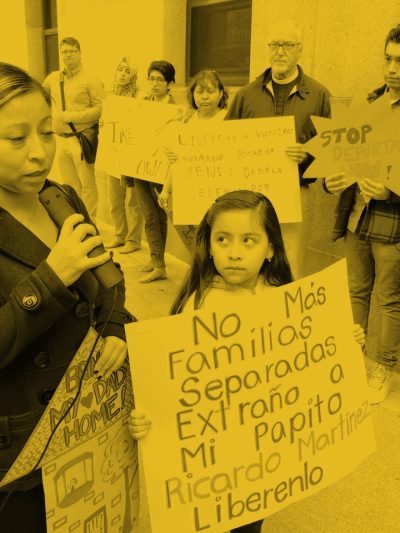
ICE Strong Arms Immigrants into Signing Deportation Documents
Immigration agents wanted Heleno to sign a document that would've resulted in his immediate deportation. So they forced him.

Keep ICE Out of Fresno: Advocates Demand an End to Sheriff Mims's Policy
In June, Fresno County Sheriff Mims allowed ICE agents to be stationed inside the local jail, stirring fear in a community she vowed to protect.
By Angélica Salceda

Unsafe, Undemocratic, Costly: ACLU Urges Monterey County to Stop Blurring Line between Local Jails and ICE
Monterey County’s Sheriff Steve Bernal just gave Immigration & Customs Enforcement (ICE) unlimited access to all jail records and detainees… and he did it without even letting the public know.
By Michelle Welsh

California is Poised to Issue a License to Discriminate – Literally
SB 249 would allow the DMV to issue driver’s licenses that include a tiny RFID chip that broadcasts your personally identifying information.

You Should Not Have a Gun Pointed at Your Head
Whatever your immigration status, you should not be arrested without proper justification. You should not have your home entered or searched without a warrant or other cause. You should not be treated differently because of your race or ethnicity. You should not have a gun pointed at your head for no reason.

What Went Wrong with the Case of Francisco Lopez-Sanchez
The tragic shooting of Kate Steinle in San Francisco has focused national attention on why her accused assailant, Francisco Lopez-Sanchez, was released from the San Francisco Sheriff’s Department’s custody in April and not deported. U.S. Immigration and Customs Enforcement and others have rushed to cast blame on the sheriff’s department for Ms. Steinle’s death. But this horrible and apparently random act of violence shouldn’t be used to push a political agenda.

10 Days Later
By the time Credy Madrid Calderon fled Honduras and sought asylum in the United States, he had been threatened, shot at and severely beaten by local gangs. Arriving in the United States, however, did not mean sanctuary for Credy. Instead of being reunited with his wife and children, all U.S. citizens, Credy found himself in an immigration jail. He waited there for months, uncertain of whether he would even get the chance to explain to a judge why he faced certain death if he was sent back to Honduras.
Stay Informed
Sign up to be the first to hear about how to take action.
By completing this form, I agree to receive occasional emails per the terms of the ACLU’s privacy statement.
By completing this form, I agree to receive occasional emails per the terms of the ACLU’s privacy statement.