
News & Commentary
ACLU Suit Shows the DOJ Gathered Location Data Without Probable Cause
After three years of litigation, we’ve finally settled a portion of one of our long-running Freedom of Information Act suits against the federal government for information about its location tracking practices. A person’s digital location information reveals detailed, private information that the government should only be able to get through a warrant based on probable cause. As part of this settlement, the government provided us with information about the types of court orders it obtains to get location information.

Connecticut Supreme Court Declares Death Penalty Is Unconstitutional
Today a Connecticut Supreme Court ruling saved 11 men from the death penalty. They were sentenced to death for crimes committed before Connecticut's death penalty repeal and must instead serve life imprisonment without release.

Racial Profiling is a Problem that Californians Want Fixed
A new poll shows that California voters overwhelmingly see a problem with biased policing in our state and support reforms to address the issue.
Courts in California Demand Warrant for Cell Phone Location Information
The ACLU of Northern California has joined the Federal Public Defender’s Office and the Electronic Frontier Foundation in supporting a warrant requirement for access to cell phone location information.

Constitutional Fail: Fresno County's Public Defense System is Broken
While the criminal justice system’s primary aim is to further public safety, all too often it is co-opted to perpetuate the history of racial inequality and economic injustice in the United States. Conscious and unconscious racial bias can impact every part of the criminal justice system, from initial stops and arrests, to bail decisions, charging practices, plea bargaining, sentencing, and time in jail.

What Went Wrong with the Case of Francisco Lopez-Sanchez
The tragic shooting of Kate Steinle in San Francisco has focused national attention on why her accused assailant, Francisco Lopez-Sanchez, was released from the San Francisco Sheriff’s Department’s custody in April and not deported. U.S. Immigration and Customs Enforcement and others have rushed to cast blame on the sheriff’s department for Ms. Steinle’s death. But this horrible and apparently random act of violence shouldn’t be used to push a political agenda.

San Francisco Needs to Take a Closer Look at Its Body Camera Plan
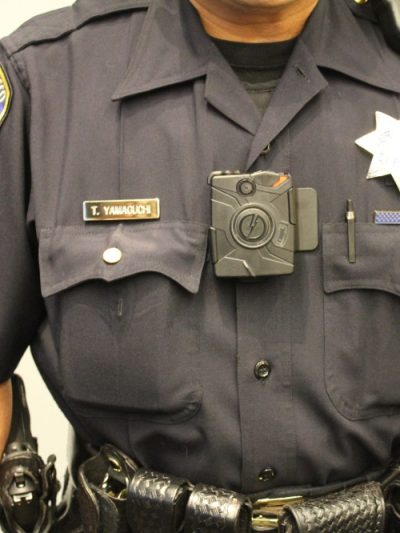
San Francisco, like many local communities, is considering the use of police body worn cameras, and the Board of Supervisors recently allocated $6.6 million for their purchase pending approval of a use policy. But for body cameras to deliver on their promise of accountability and promote public trust, there must be transparency and public trust in both the process that leads to a decision to adopt them and the policy that may ultimately govern their use. That's why the ACLU of California, joined by the Council on American-Islamic Relations and Color of Change, sent a letter today detailing our concerns with the transparency and effectiveness of the process so far and the provisions of the July 9, 2015 draft policy.
California Shouldn't Lag on Police Reform
Brutality takes many forms. One kind takes your life away, another leaves your body broken. Perhaps the most insidious kind seeks you out and makes you feel terrified, harassed, unsafe, unprotected, as though people see you as a threat through no fault of your own.

The Death Penalty Has an Innocence Problem — and Its Days Are Numbered
The demise of the death penalty is upon us. While the Supreme Court ruled this week to allow the continued use of a controversial lethal injection drug, Justice Stephen Breyer’s sweeping dissent invited the nation to question capital punishment’s constitutionality. If you have any doubt about the answer, just ask Henry McCollum or Paul House.
Stay Informed
Sign up to be the first to hear about how to take action.
By completing this form, I agree to receive occasional emails per the terms of the ACLU’s privacy statement.
By completing this form, I agree to receive occasional emails per the terms of the ACLU’s privacy statement.