
News & Commentary
Fighting for Transparency
Today, the ACLU of Northern California went to court in two separate cases with the same goal: shedding light on the government's use of controversial and arguably unconstitutional surveillance techniques. In the first, we filed a motion to unsealsecret court papers authorizing the government to use a device called a "stingray" to track an individual's location. In the second, we filed a new lawsuit to force federal prosecutors to disclose their policies, practices and procedures for tracking cell phones.
By Linda Lye

Carriers Face Increasing Demands for Information - California Can Lead the Way in Protecting Privacy
This morning's New York Times features a front-page story about an "uptick" in demands for information from cell carriers by law enforcement. As the ACLU's Chris Calabrese writes, the numbers are staggering: 1.3 million requests for information, possibly many times that many users affected, hundreds of full-time employees whose sole job is to process incoming demands, and reports that these demands are increasing by 10% or more every year. While Congress is still debating bills that would address this, a California bill (SB 1434) that would require law enforcement to obtain a search warrant before demanding sensitive location information is already progressing through the legislature with bipartisan support. With your help, California can once again be a leader in protecting individual privacy.
By Chris Conley
Foursquare's New App Needs New Privacy Controls
In early June, the popular location based service foursquare overhauled its mobile app. As a result of these changes, users can now see all of their friends' check-ins from the last two weeks. Many users may not understand how much of their location history is visible to their friends, and even those users aware of the details have no practical way to opt out. And while forcing users to share that sensitive information might be popular with hitmen, it might not be popular with foursquare users who now broadcast location history to their friends (and maybe soon to their friends' intensely curious apps?) without expecting or intending to. Help us tell foursquare to give you the tools to control your own location history.
By Chris Conley
Making Your Privacy Vote Count on Facebook
As Facebook has grown from a dorm room project to a publicly-traded company, its users have repeatedly challenged the service on privacy issues, drawing attention from the media and governments as a result. And while Facebook is often perceived as acting like some constitution-less nation doing whatever it wants without regard to user concerns, its very existence as a social networking site depends on users uploading information and trusting the site with that information. Facebook may not be a nation, but it does have a social contract with its users, albeit one driven by revenue and functionality rather than governance. And while user efforts to renegotiate this contract haven't always succeeded, even failed attempts provide some insight into how users might effectively achieve their aims when their wishes conflict with Facebook's actions.
By Chris Conley
Plenty to Hide
A commentator on my recent post about the DEA installing license plate scanners on the nation's interstate highways asks, "If you aren't doing anything illegal why would you care if someone captures your license plate number?"
By Jay Stanley
SceneTap Bars Tap Into Patron Outrage by Failing to Consider Privacy Concerns
When a number of bars in San Francisco agreed to install facial detection cameras to collect and broadcast demographic information about the bar's patrons, the local community lashed out – not only at SceneTap, the developer of the service, but also at the bars who agreed to use it. Outraged patrons wrote scathing reviews on sites like Yelp and threatened to boycott bars that installed the service. By installing a camera that captured "user data" without giving customers any way to control that data or choose not to participate, the bars left their patrons with only one real choice to protect their privacy: skip SceneTap bars entirely.
By Chris Conley
DEA Recording Americans’ Movements on Highways, Creating Central Repository of Plate Data
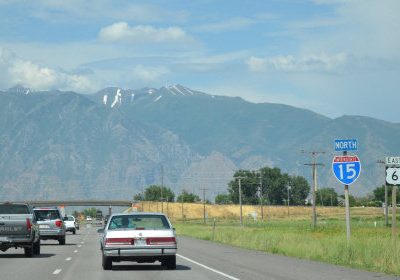
The DEA wants to capture the license plates of all vehicles traveling along Interstate 15 in Utah, and store that data for two years at their facility in Northern Virginia. And, as a DEA official told Utah legislators at a hearing this week (attended by ACLU of Utah staff and covered in local media), these scanners are already in place on “drug trafficking corridors” in California and Texas and are being considered for Arizona as well. The agency is also collecting plate data from unspecified other sources and sharing it with over ten thousand law enforcement agencies around the nation.
By Jay Stanley
Facebook: $100 Billion IPO. Almost 1 Billion Users. You Do the Math.
The big news in the business world this week is Facebook's ongoing Initial Public Offering, where the company is selling shares to the public based on an estimated value of around one hundred billion dollars. [Or, as Dr. Evil would say: one hundred billion dollars.]
By Chris Conley
Stay Informed
Sign up to be the first to hear about how to take action.
By completing this form, I agree to receive occasional emails per the terms of the ACLU’s privacy statement.
By completing this form, I agree to receive occasional emails per the terms of the ACLU’s privacy statement.