
News & Commentary
Has Your School Done Its Homework on Sex Ed?
It's back to school season again. Here's how to make sure your school's sexual health education is up to date and follows California law.

Huge Ruling! Mandatory Immigration Detention "Smacks of Injustice"
Communities are being torn apart by mandatory immigration detention. Every day, more than 30,000 immigrants are held in prison-like without due process.
By Angélica Salceda

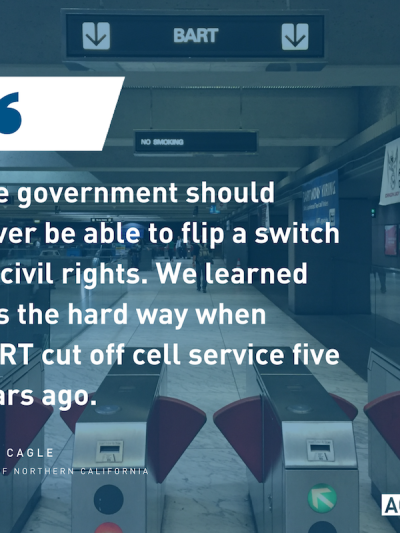
Five Years Later, BART's Cell Service Shutdown is Still a Wakeup Call
Five years ago today, BART made the unprecedented decision to shut off cell service at multiple stations in order to suppress a protest. Scores of riders were left without the ability to communicate.
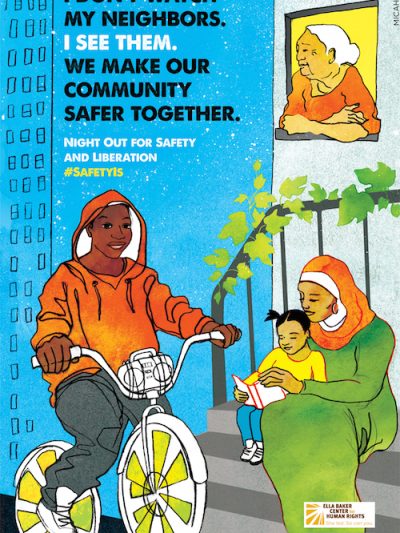
What Does Safety Mean to You?
Every year on the first Tuesday of August, the National Association of Neighborhood Watch sponsors a “National Night Out.” The tenor of these events usually reinforce the idea that neighborhood watch and police-community partnerships are the pathway to public safety.
By ACLU of Northern California
#FreedomNow: Global Call to Action 7.21
We support the Movement for Black Lives and the collective #FreedomNow actions taking place globally on Thursday, July 21. Join us at a protest or take these online actions to show your support.
By ACLU of Northern California

Facebook's Expansion Plans Could Displace Thousands in Menlo Park
Facebook’s proposed headquarters expansion would inject tens of thousands of new workers into one of the tightest housing markets in the country, yet its environmental study denies any impact on housing demand or displacement pressures.

When Privacy Gets in the Way of Becoming a Pokémon Master
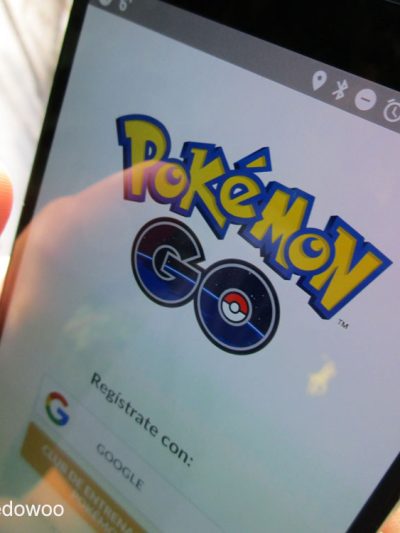
I’m the first to admit: I love Pokémon Go. Another thing I love? Privacy. I was shocked to find out that in signing up to explore the Pokémon world, I'd given Pokémon Go permission to explore my Gmail inbox.


Stay Informed
Sign up to be the first to hear about how to take action.
By completing this form, I agree to receive occasional emails per the terms of the ACLU’s privacy statement.
By completing this form, I agree to receive occasional emails per the terms of the ACLU’s privacy statement.