
News & Commentary
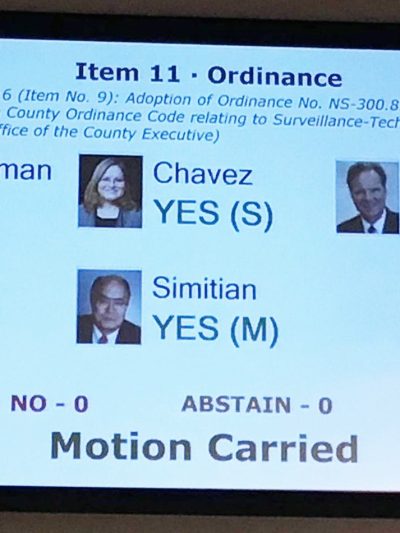
Santa Clara County Passes Landmark Law to Shut Down Secret Surveillance
Santa Clara County has passed a landmark law to stop secret and discriminatory surveillance. The passage of this new law comes on the heels of San Jose's secret acquisition of a drone, the Santa Clara Sheriff's attempt to quietly buy an invasive cell phone tracking device, and revelations that Fresno and Bay Area police departments have been using social networking software that monitors Black Lives Matter activists.
Who's the Most Powerful Elected Official Most Voters Have Never Heard Of?
Every four years, the U.S. explodes into a frenzy with coverage and commentary about the next President of the United States. You literally have to be hiding under a rock right now not to be bombarded with Clinton, Sanders, and Trump coverage.

The Government Is Trying to Influence Speech on Social Media – But How?
It’s pretty simple: our social media content is protected by the First Amendment. That’s why the ACLU is concerned that the federal government is pressuring social media companies to limit content on platforms that hundreds of millions of people use every day.

Why Breastfeeding Rooms Are a Victory for California Students
Fresno High School has changed a lot since I attended back in the 90s. The new breastfeeding room communicates to parenting teens that they are worthy of our support, our care, and our respect.
By Michelle Miller

Fresno Looking for New Ways to House Discriminatory Practices
The slum housing crisis in Fresno is a crisis of poverty and racism. Yet today, the Fresno City Council will vote on an overly broad and vague "nuisance" ordinance that will only open the door to more discrimination.

ACLU Report: Asset Forfeiture Takes Wealth from Communities of Color
Did you know that in 2014 police took more property from people in the U.S. than burglars did? Frightening, but absolutely legal. A new ACLU of California report finds that, although this tactic of policing for profit can impact all types of innocent people, folks of color and poor people bear the heaviest burden.

Twitter Should Refuse to Sell Your Tweets to Local Law Enforcement
Yesterday, the Wall Street Journal reported that Twitter is no longer going to allow US intelligence agencies to access a Twitter-affiliated business service that compiles and analyzes the hundreds of millions of daily tweets on the service.

Our Fears Confirmed: Proposed Lethal Injection Regulations Fraught with Deep and Troubling Flaws
In 2015, the CA Dept. of Corrections and Rehab. published proposed regulations for a new execution protocol. This triggered an important public comment period in accordance with CA law. The ACLU had previously submitted a Public Records Act request, in order to shed light on the proposed regulations and enhance the public's ability to comment meaningfully on them. After withholding records for months, the department was ordered to turn over more than 800 documents to the ACLU.

Stay Informed
Sign up to be the first to hear about how to take action.
By completing this form, I agree to receive occasional emails per the terms of the ACLU’s privacy statement.
By completing this form, I agree to receive occasional emails per the terms of the ACLU’s privacy statement.