
News & Commentary
Surveillance Technology: It's Not Just About Snowden
For communities of color, surveillance isn't just an invasion of personal privacy, it’s a tool for high tech racial profiling that can have disastrous and fatal consequences.

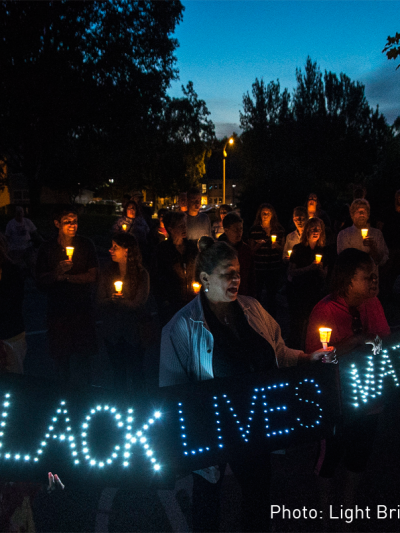
The Government Is Watching #BlackLivesMatter, And It's Not Okay
According to documents recently obtained by The Intercept in response to a Freedom of Information Act (FOIA) request, the government is surveilling the #BlackLivesMatter movement.
California Federal Judge to Government: Get a Warrant for Cell Phone Location Data
A federal district court held that the government must obtain a warrant to obtain historical cell phone location data. This important ruling makes it clear that we don’t have to give up privacy to participate in modern society.

Sandra Bland's Only Crime: She Knew Her Rights
Sandra Bland had a constitutional right to give her arresting officer the middle finger. She could have even told him to f*** off. Nothing in the law prevented her from being rude.

Courts in California Demand Warrant for Cell Phone Location Information
The ACLU of Northern California has joined the Federal Public Defender’s Office and the Electronic Frontier Foundation in supporting a warrant requirement for access to cell phone location information.

Trans Women Are in a Fight for Their Lives. We Must Join Them.
Trans women’s lives are endangered when renting hotel rooms, driving cars, walking down the street. How much longer will we sit idly by while they are murdered for having the audacity to exist? This must stop.

ACLU SoCal Files Lawsuit over Misappropriated Education Funds
The ACLU of Southern California sued LAUSD, asking that the school district be required to invest the appropriate amount of money to develop new or improved services for the high need students targeted under LCFF.

You Should Not Have a Gun Pointed at Your Head
Whatever your immigration status, you should not be arrested without proper justification. You should not have your home entered or searched without a warrant or other cause. You should not be treated differently because of your race or ethnicity. You should not have a gun pointed at your head for no reason.


Stay Informed
Sign up to be the first to hear about how to take action.
By completing this form, I agree to receive occasional emails per the terms of the ACLU’s privacy statement.
By completing this form, I agree to receive occasional emails per the terms of the ACLU’s privacy statement.