
News & Commentary
Suspicious Activity Reports Go to Court
Yesterday a federal judge in the Northern District of California held a hearing to determine whether our lawsuit challenging the U.S. government’s domestic surveillance program could proceed.
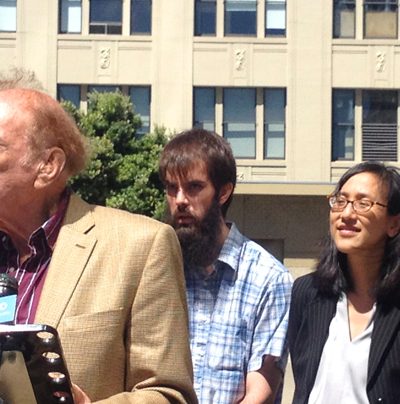
Does the Americans with Disabilities Act Apply to Cops?
People with disabilities face violent and deadly consequences when law enforcement does not take disabilities into account. It is not okay to take a deaf person down for failing to follow verbal orders. It is not okay to attack someone with autism because he is slow to respond to instruction. It is not okay to treat a woman with a mental disability as if she were a dangerous criminal.

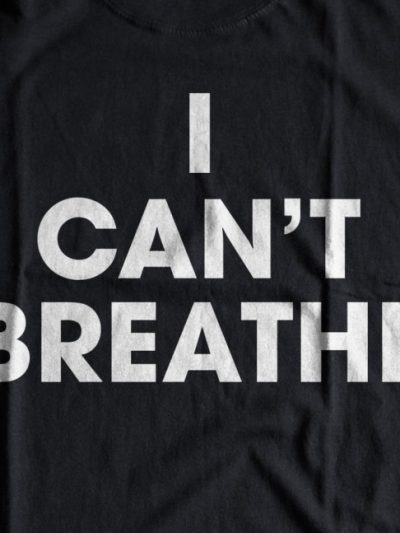
Fort Bragg School District Must Reverse “I Can’t Breathe” Shirt Ban
Today, we sent a letter to the Fort Bragg Unified School District asking that the District immediately reverse its policy banning participants and spectators at the holiday basketball tournament from wearing t-shirts that say “I Can’t Breathe.”
Victory! Catholic School Held Accountable for Sex Discrimination
Emily Herx never imagined that she could lose her job for trying to get pregnant. But after working for more than seven years as a literature and language arts teacher at a Catholic school in Indiana, she was shocked to learn that her teaching contract would not be renewed: All because the in vitro fertilization (IVF) treatment she was undergoing in an attempt to have a second child made her a "grave, immoral sinner" in the eyes of her religious employers.

Why Can't I Use the Boys' Bathroom at School?
My family contacted the ACLU and is working with them to file a complaint with the Department of Justice in order to make Gloucester High School safer and more inclusive to transgender youth while hopefully encouraging other local schools to do the same.
To Apply or Not to Apply? That is the Question.
Immigration as a legal issue is so complicated in and of itself. But when you add people’s real-life experiences, it becomes even more so. So I think it is worthwhile for us to explore the answer to one of the most complicated questions: should I apply for an AB 60 license?



Stay Informed
Sign up to be the first to hear about how to take action.
By completing this form, I agree to receive occasional emails per the terms of the ACLU’s privacy statement.
By completing this form, I agree to receive occasional emails per the terms of the ACLU’s privacy statement.