
News & Commentary
Fighting for Transparency
Today, the ACLU of Northern California went to court in two separate cases with the same goal: shedding light on the government's use of controversial and arguably unconstitutional surveillance techniques. In the first, we filed a motion to unsealsecret court papers authorizing the government to use a device called a "stingray" to track an individual's location. In the second, we filed a new lawsuit to force federal prosecutors to disclose their policies, practices and procedures for tracking cell phones.
By Linda Lye

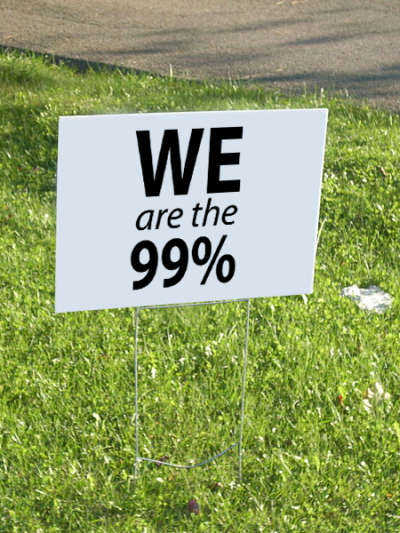
$700 for a Lawn Sign?
The ACLU-NC filed suit against the City of Milpitas today over its overly-restrictive and vague sign ordinance that is curtailing free speech in the city.
By Alan Schlosser
Incarceration vs. Education: There's an app for that!
As state legislators accept deep cuts to education and the safety net, the ACLU is challenging Californians to acquire a real-time sense of how the state's bottom line would fare if prisons and jails were placed at the center of the chopping block.
By ACLU of Northern California
The TRUST Act: Good for all Californians.
On Wednesday, July 18th the ACLU and community members gathered to support Juana Reyes, who is facing deportation after an arrest for selling tamales outside of the Florin Rd. Walmart in Sacramento and to urge the passage of the TRUST Act.
By Danielle Riendeau
Spying on Occupy?
Why is the FBI spying on Occupy protesters? The American Civil Liberties Union of Northern California is determined to find out.
By Linda Lye
Stop and Frisk in San Francisco: Another Name for Racial Profiling
Mayor Ed Lee shocked the city when he suggested bringing New York's failed stop-and-frisk policy to San Francisco. The ACLU of Northern California sent a letter to Mayor Lee yesterday explaining why it's such a bad policy.
By Alan Schlosser
Carriers Face Increasing Demands for Information - California Can Lead the Way in Protecting Privacy
This morning's New York Times features a front-page story about an "uptick" in demands for information from cell carriers by law enforcement. As the ACLU's Chris Calabrese writes, the numbers are staggering: 1.3 million requests for information, possibly many times that many users affected, hundreds of full-time employees whose sole job is to process incoming demands, and reports that these demands are increasing by 10% or more every year. While Congress is still debating bills that would address this, a California bill (SB 1434) that would require law enforcement to obtain a search warrant before demanding sensitive location information is already progressing through the legislature with bipartisan support. With your help, California can once again be a leader in protecting individual privacy.
By Chris Conley
Foursquare's New App Needs New Privacy Controls
In early June, the popular location based service foursquare overhauled its mobile app. As a result of these changes, users can now see all of their friends' check-ins from the last two weeks. Many users may not understand how much of their location history is visible to their friends, and even those users aware of the details have no practical way to opt out. And while forcing users to share that sensitive information might be popular with hitmen, it might not be popular with foursquare users who now broadcast location history to their friends (and maybe soon to their friends' intensely curious apps?) without expecting or intending to. Help us tell foursquare to give you the tools to control your own location history.
By Chris Conley
Stay Informed
Sign up to be the first to hear about how to take action.
By completing this form, I agree to receive occasional emails per the terms of the ACLU’s privacy statement.
By completing this form, I agree to receive occasional emails per the terms of the ACLU’s privacy statement.