
News & Commentary
Protecting Privacy, Teen Safety, and Abortion Rights
In the span of four years, California voters three times rejected a ballot initiative that would require doctors to notify a pregnant teen's parent before an abortion. Propositions 73, Proposition 85 and Proposition 4 all proposed to amend the state Constitution to reverse the state Supreme Court ruling in an ACLU lawsuit that teenagers have fundamental rights to decide whether to end an unintended pregnancy.
By ACLU of Northern California

Securing Sex Ed Victories at State and Local Levels
For more than a decade, the ACLU of Northern California has been working to ensure that sex education in public schools is science-based, free of bias, medically accurate and age-appropriate. The law we co-sponsored with Planned Parenthood in 2004 has become a model for other states and for the national REAL (Responsible Education About Life) Act. After years of Bush Administration support for ineffective, biased and harmful abstinence-only education, the nation is poised to take a new direction, and many are looking to California as a leader.
By ACLU of Northern California
Fighting for Transparency
Today, the ACLU of Northern California went to court in two separate cases with the same goal: shedding light on the government's use of controversial and arguably unconstitutional surveillance techniques. In the first, we filed a motion to unsealsecret court papers authorizing the government to use a device called a "stingray" to track an individual's location. In the second, we filed a new lawsuit to force federal prosecutors to disclose their policies, practices and procedures for tracking cell phones.
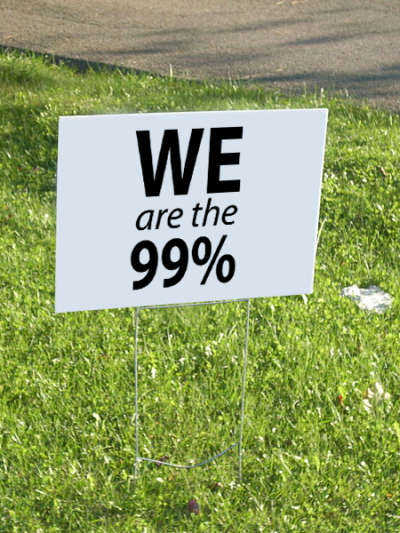
$700 for a Lawn Sign?
The ACLU-NC filed suit against the City of Milpitas today over its overly-restrictive and vague sign ordinance that is curtailing free speech in the city.
Incarceration vs. Education: There's an app for that!
As state legislators accept deep cuts to education and the safety net, the ACLU is challenging Californians to acquire a real-time sense of how the state's bottom line would fare if prisons and jails were placed at the center of the chopping block.
By ACLU of Northern California
The TRUST Act: Good for all Californians.
On Wednesday, July 18th the ACLU and community members gathered to support Juana Reyes, who is facing deportation after an arrest for selling tamales outside of the Florin Rd. Walmart in Sacramento and to urge the passage of the TRUST Act.
Spying on Occupy?
Why is the FBI spying on Occupy protesters? The American Civil Liberties Union of Northern California is determined to find out.

Stop and Frisk in San Francisco: Another Name for Racial Profiling
Mayor Ed Lee shocked the city when he suggested bringing New York's failed stop-and-frisk policy to San Francisco. The ACLU of Northern California sent a letter to Mayor Lee yesterday explaining why it's such a bad policy.
Stay Informed
Sign up to be the first to hear about how to take action.
By completing this form, I agree to receive occasional emails per the terms of the ACLU’s privacy statement.
By completing this form, I agree to receive occasional emails per the terms of the ACLU’s privacy statement.