Racial Equity & Student Expression in Schools
Last updated: January 20, 2021 10:43 pm
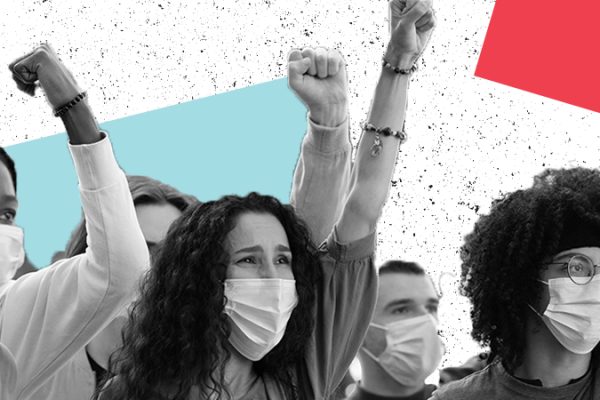
Students have organized and led a remarkable number of movements for social change. Many of the protests following the murder of George Floyd by Minneapolis police in 2020 were student-led. During the Civil Rights movement, Black students like the “Little Rock Nine,” put their lives on the line for equal justice at school.
Schools in California and across the country continue to limit student expression and the punishments for speaking up are often applied discriminately. Particularly concerning are incidents of schools restricting the speech of Black students who express support for Black lives and the Black Lives Matter movement.
Recent examples:
- A school district ordered students to remove memorial posters made to honor the lives of George Floyd and Breonna Taylor.
- A school district demanded that students remove signs and posters voicing support for the Black Lives Matter movement even though the images were placed in an area designated for public messages.
- Students were asked to choose an avatar to represent themselves during virtual learning. A 13-year-old Black girl chose an avatar depicting a young Black girl. The words "Black Lives Matter" were displayed on the image. Her teacher demanded that she replace her avatar with a "neutral" picture, or face disciplinary action.
While these incidents are concerning, the good news is that the U.S. and California Constitutions and the California Education Code protect student speech in all of these examples. Remember, as a student, you have the right to use your voice, to express pride in your identity and your culture, and to stand up for what you believe in – and if your school tries to censor you, you have the power to respond. We hope this resource will provide you with the tools and knowledge you need to successfully challenge violations of your free speech rights, on and off-campus.
In this resource you will find:
- History of Student Activism & Student-led Movements
- Know Your Rights Guides for Student Expression
- Examples of Schools Unconstitutionally Limiting Student Speech
- Disparate Impacts on Black Students
- Confronting False Equivalencies
- Setting Precedent: Landmark U.S. Supreme Court Cases for Students' Rights
- Sample Advocacy Letter to Use When Communicating with School Officials
- How to File a Complaint if You or Your Students Rights are Violated
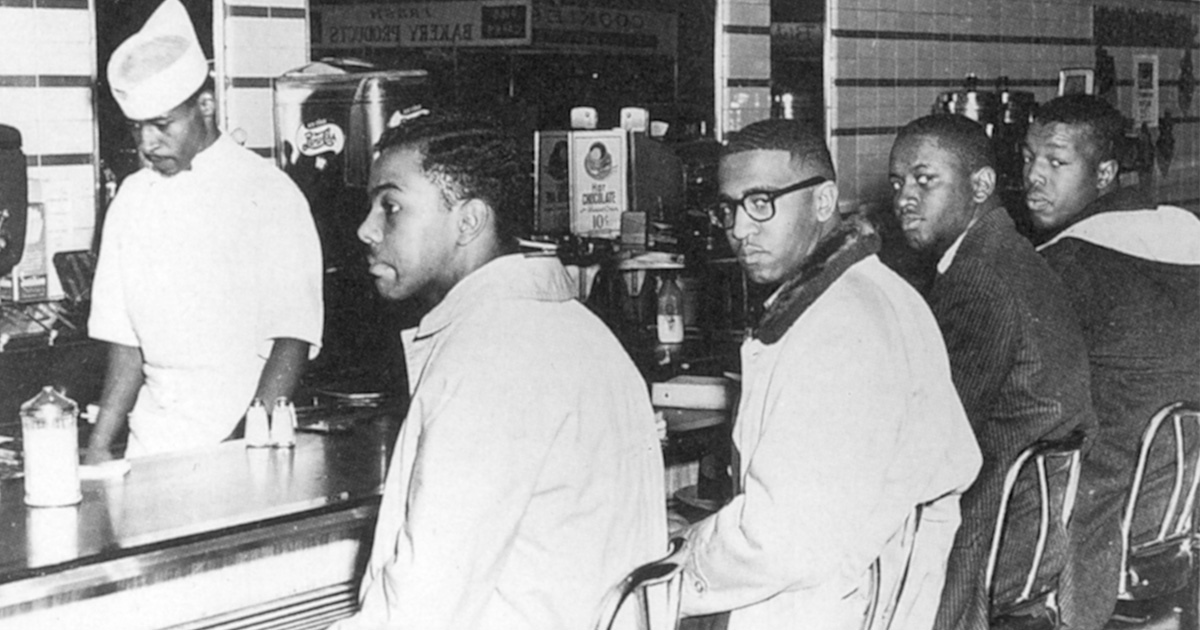
Four Black students sit at a Woolworth's lunch counter in Greensboro, North Carolina to draw attention to racial segregation. Photo: Granger Historical Picture Archive
History of Student Activism & Student-led Movements
Know Your Rights Guides for Student Expression
As a student, your rights give you the power to speak out, to organize, and to wear clothing that expresses your identity and values.
- You do not lose the right to free speech just because you are a student at school. Specifically, freedom of speech protects your right to express your ideas and beliefs in the manner you choose.
- School officials can’t censor you just because they disagree with your point of view or because they think the topic is too controversial. Check out these frequently asked questions and learn more about your rights.
- Dress codes cannot be written or enforced in a way that discriminates based on race or ethnicity. For example, a dress code that prohibits hairstyles predominantly worn by Black students, such as braids, twists, or locks, would likely be illegal race discrimination under state and federal law.
- Black students are more likely to attend schools that employ school-based police officers. Inevitably, a police presence at school increases the likelihood that students will be confronted by police and endure unwarranted searches of their person and/or belongings. Know your rights about searches of students.
- Black and Brown people often have a very different experience with police than white people do. They are more likely to be detained, handcuffed, searched, and have police point guns at them. Unfortunately, these kinds of dangerous and discriminatory encounters with police can also happen to students at or outside of school. Know Your Rights: Police Interactions for Black and Brown People.
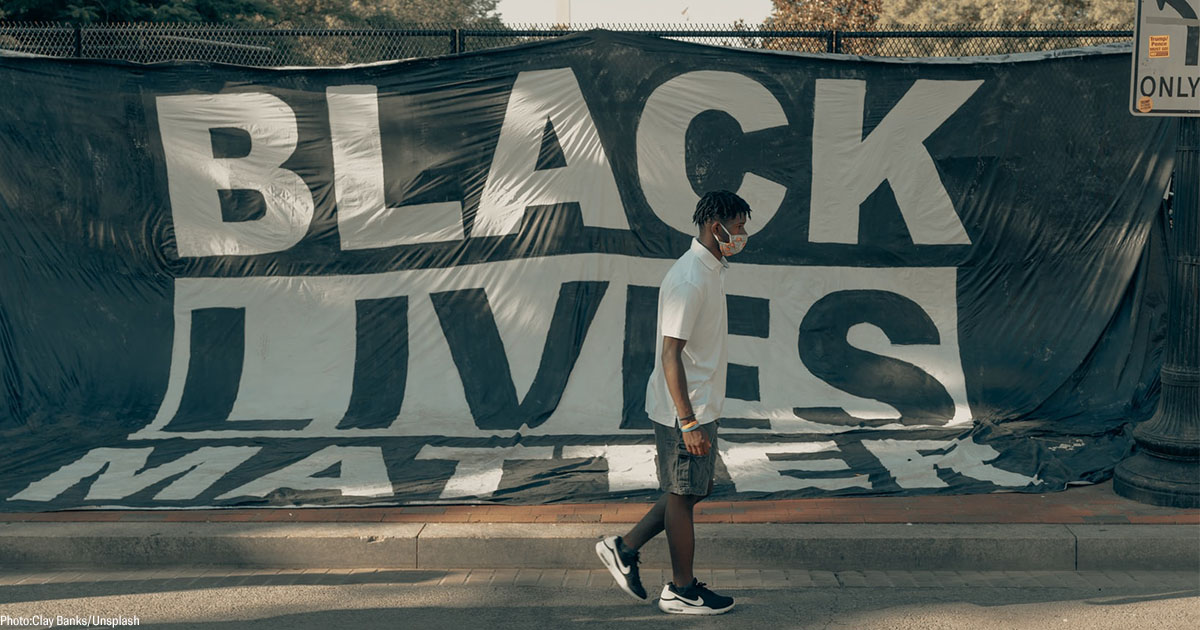
A Black student walks at a rally in Washington D.C. in response to police brutality. Photo: Clay Banks/Unsplash.com
Examples of California Students Successfully Challenging Violations of Their Free Speech Rights
Impact on Black Students
Black students in California, and across the country, are consistently discriminated against and targeted by teachers and administrators. Black students are suspended from school three times as often as white students and are four times as likely to receive a referral to law enforcement or be subject to a school-related arrest.
Black students are also more likely to attend schools that employ in-school police officers. Inevitably, a police presence at school increases the likelihood that students will be confronted by police and endure unwarranted searches of their person and/or belongings. See our guide on searches of students here.
This is part of a pervasive pattern of anti-blackness in California schools. The ACLU has had to intervene in school districts across California, including Fresno Unified, Visalia Unified, Eureka Unified, and Alameda Unified, for creating a racially hostile climate for Black students and for students who support Black students.
Schools must create an equitable learning environment where Black students feel welcome. This means protecting students’ right to speak out against anti-Black racism, police brutality against Black people, and the structural inequities affecting Black students in the classroom.
Vague language in dress codes that bans “exotic” makeup and “distracting or unusual” hairstyles opens the door to discrimination that is often disproportionately leveled against Black students. No student should be punished for what they look like, and any standard of appearance based on Caucasian norms is discrimination.
Calling out incidents of discrimination matters – doing so can bring awareness and help create momentum to pass legislation such as the CROWN (Creating a Respectful and Open World for Natural Hair) Act, which passed in 2020 and made it illegal to discriminate against someone in the workplace or at school for the way they wear their hair. This law is a critical step forward in dismantling the notion that what is appropriate in society should be dictated by Eurocentric standards.
Confronting False Equivalencies
These definitions are meant to help students and parents who might be called upon to confront common false equivalencies.
- The Black Lives Matter movement originated in 2013 in response to the acquittal of Trayvon Martin’s murderer, George Zimmerman. ‘Black Lives Matter’ became widely used to support Black lives, particularly in ending state-sanctioned violence against Black people. Black people are disproportionately the victims of police violence.
- ‘All Lives Matter’ was created as a counter expression to ‘Black Lives Matter’ and is problematic because it is based on the fundamental misinterpretation that ‘Black Lives Matter’ means that other lives do not matter. All lives can’t matter until Black lives do. The ‘All Lives Matter’ slogan also undermines the purpose of ‘Black Lives Matter,’ which calls particular attention to the disproportionate, state-sanctioned violence against Black people and to end that violence.
- ‘Blue Lives Matter’ is a countermovement advocating that hate crime statutes should include the killing of law enforcement officers. Notably, one’s profession is different from other protected characteristics that include race, nationality, gender identity, sexual orientation, disability, and religion.
- ‘Black Power’ is a phrase that gained popularity in the 1960s stemming from the Black Power Movement. Black Power signifies self-respect and racial pride and is used in celebrating the accomplishments of Black people. Stokely Carmichael, a leader in the Black Power movement, said, “it is a call for Black people in this country to unite, to recognize their heritage, to build a sense of community. It is a call for Black people to define their own goals and to lead their own organizations.”
- ‘White Power’ is a white supremacist slogan designed to mimic the ‘Black Power’ slogan. The phrase is used to purport that white people are a superior race and should have power over other races.
Note on Hateful Speech: At its core, free speech in schools is about the ability to discuss ideas. Hateful speech that disrespects, denigrates, or demonizes a group can and should be called out as such. To be clear, such speech may be legally allowed, but the ideas that it conveys can and should be challenged by other students or, in certain circumstances, by educators themselves. Bullying or harassment that includes racial slurs, homophobic or transphobic slurs, refusing to respect a transgender person’s identity, anti-Muslim or immigrant remarks, or comments about students’ nationality or ethnicity must not be tolerated. School and district staff must consider whether the hateful speech creates a hostile educational environment for students based on a student’s color, race, national origin, gender, gender expression, gender identity, sexual orientation, disability, or religion; and if so, they are obligated to take reasonable steps to address and stop the harassment.
Setting Precedent: Landmark U.S. Supreme Court Cases for Students' Rights

A student raises their fist during a rally to protest gun violence in schools. Photo: Molly Kaplan/ACLU
Resources for Taking Action
Need legal help?
Submit a legal intake and tell us more about the issue you are experiencing in school.
Related Issues
Stay Informed
Sign up to be the first to hear about how to take action.
By completing this form, I agree to receive occasional emails per the terms of the ACLU’s privacy statement.
By completing this form, I agree to receive occasional emails per the terms of the ACLU’s privacy statement.