Publication
Jul 6, 2022
Black Bill of Rights Community Toolkit
  • Free Speech|
  • +2 Issues

Black Bill of Rights: a Community Toolkit

In 2021, we partnered with the Black Bill of Rights to develop a community toolkit for people seeking to address systemic oppression and anti-Black racism. The Black Bill of Rights is a resource hub that provides education, templates, and data for communities to take action and develop policies and practices that restore freedom and opportunity for Black people in the United States. It is an ever-evolving online place for Black leaders to share, learn from one another, and grow together.
Publication
Feb 9, 2022
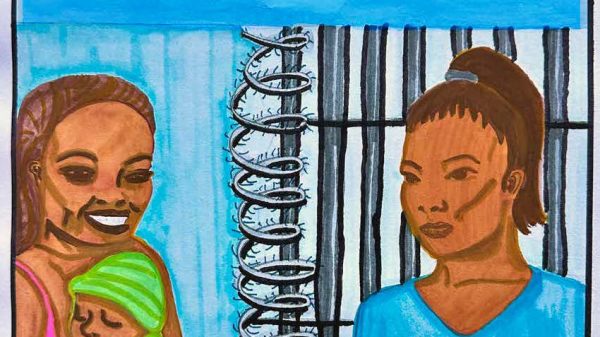
An illustration of a woman kneeling on the left. On the right text reads, "Collusion in California's Central Valley" The Case for Ending Sheriff Entanglement with ICE
  • Criminal Law Reform|
  • +2 Issues

Collusion in California's Central Valley: The Case for Ending Sheriff Entanglement with ICE

Over the past decade, the California Legislature enacted a trio of critical laws intended to protect people from collusion between state and local law enforcement agencies and agencies engaged in immigration enforcement. Certain sheriffs and local law enforcement agencies, however, have circumvented these laws and undermined the protections envisioned for California immigrants — at times in consultation with U.S. Immigration and Customs Enforcement (ICE).
Publication
Jan 25, 2022
Report cover
  • Criminal Law Reform|
  • +1 Issue

In(Justice) in Sacramento: A Case for Change and Accountability

Sacramento County is an important jurisdiction for reform of the laws and policies that produce mass incarceration. The county incarcerates roughly 10,000 people between county jails and state prisons. The DA, Sheriff’s Department, Probation Department, and courts consume 64 percent of the County General Fund, yet the county’s crime rate — though slightly higher than the state and federal average — has declined steadily since 2006. People of color are incarcerated at disproportionately high rates in Sacramento and feel the collateral effects of the carceral system most acutely. This report outlines the practices and policies of Sacramento DA Anne Marie Schubert’s office through an analysis of prosecution data and qualitative research methods. Findings show ample opportunities for reform, many of which are within the DA’s purview and can be modeled after policies in other jurisdictions.
Publication
Jan 19, 2022
Report cover
  • Criminal Law Reform|
  • +1 Issue

In(Justice) in Merced County: A Case for Change and Accountability

California and the United States as a whole incarcerate more people than anywhere else in the world, in both absolute and per capita terms1 District attorneys (DAs) in California can have a powerful role in curbing mass incarceration and hold tremendous discretion within the criminal legal system, but they have historically been subject to limited accountability. This report outlines the practices and policies
of Merced County District Attorney Kimberly
Helm Lewis’s office by presenting quantitative and qualitative findings
Publication
Dec 1, 2021
Report cover
  • Criminal Law Reform|
  • +1 Issue

In(Justice) in Riverside: A Case for Change and Accountability

California District Attorneys (DAs) have historically used their legal discretion to prioritize aggressive “tough-on-crime” prosecution, which has caused incarceration rates to skyrocket and destroyed lives Even though they are elected officials, DAs are often not held accountable for these practices, in part, because their role is not well understood, and much of their work is hidden from the public. As part of the ACLU’s broader efforts to decrease incarceration and hold DAs accountable across California, this report highlights the current policies and practices of the Riverside County District Attorney’s office and makes recommendations for urgent changes.
Publication
Nov 19, 2021
A bench is to the right with text to the left that reads "Outside the Law"
  • Criminal Law Reform|
  • +1 Issue

Outside the Law: The Legal War Against Unhoused People

The plight of people who are unhoused has reached horrific proportions in California, but instead of embarking on a resurgence of affordable housing, communities have instead instituted policies and regulations that target unhoused people by harassing, citing, segregating, banishing, and even imprisoning them.
Publication
Nov 17, 2021
Report cover
  • Criminal Law Reform|
  • +1 Issue

In(Justice) in Orange County: A Case for Change and Accountability

California district attorneys (DAs) have historically played a central role in driving incarceration. Although they are elected officials, DAs have not typically been held accountable by the public for policies and practices that perpetuate racial disparities and criminalize poverty, mental illness, and other social issues. This 2021 report outlines the policies and practices of the Orange County District Attorney Todd Spitzer’s office and makes recommendations for urgent changes to reduce the harms the office is perpetuating.
Publication
Sep 23, 2021
a hand holding a pen on the right and text that reads 'No Police In Schools'
  • Police Practices|
  • +1 Issue

No Police in Schools

Over the past few decades, police have become a dominant fixture in California schools. Their presence has devastating and discriminatory impacts on tens of thousands of California students.
Publication
Sep 22, 2021
right to remain a student
  • Criminal Law Reform|
  • +2 Issues

The Right to Remain a Student: How CA School Policies Fail to Protect and Serve

A disturbing trend has emerged in California—police officers are stationed in schools and are replacing educators as disciplinarians for minor offenses and student behavior issues. Further, on-campus policing often results in over-criminalizing students—mostly low-income students of color—and pushes affected students out of the educational environment and into the school-to-prison pipeline. This increased policing in schools harms school climate and undermines students’ self-esteem by making them feel like suspects and criminals.