
Get Flock Cameras Out of Your Community
What the Flock is going on with ALPR cameras?
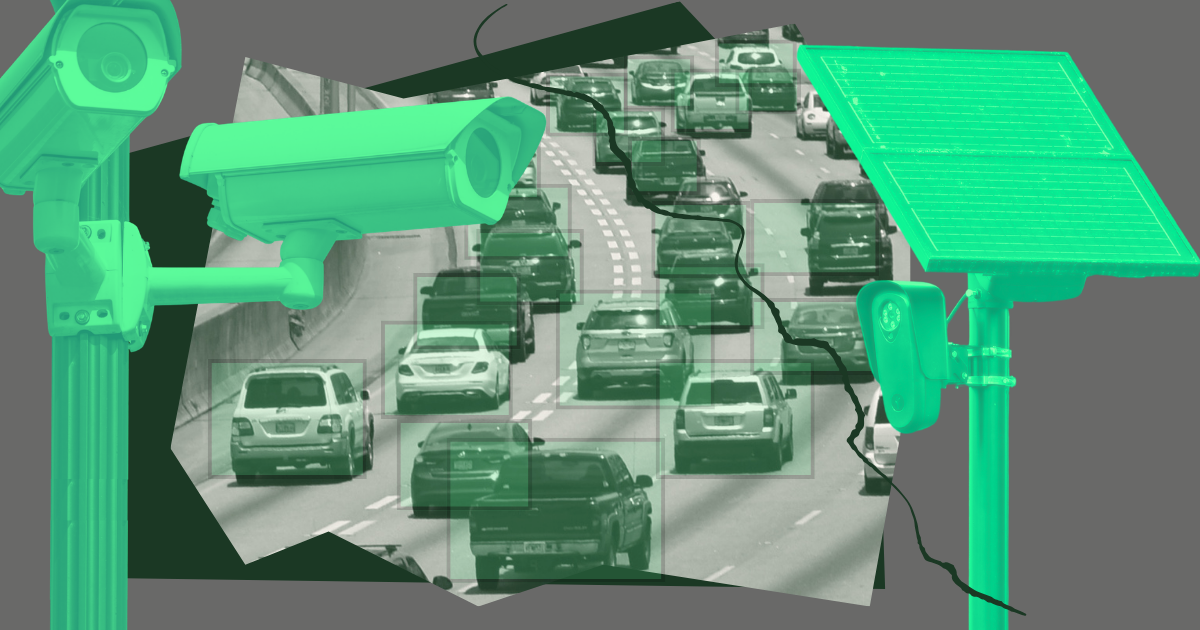
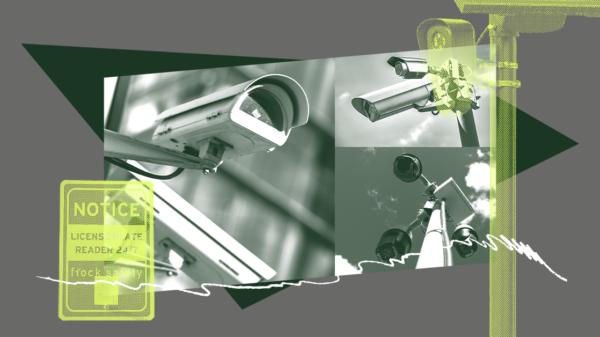
Automatic license plate reader (ALPR) companies like Flock Safety are quietly building a nationwide mass surveillance system. If there are Flock cameras in your city, they’re tracking, logging, and sharing your movements without a warrant. But more and more communities are fighting back against these invasive cameras — and yours can be one of them!
For more than a decade, the ACLU of Northern California has been exposing these types of mass surveillance systems and have taken police agencies to court for breaking laws around using them — from the Marin County Sheriff’s illegal data-sharing with ICE to San Jose’s warrantless searches of its massive Flock camera network. Because here’s the thing: Flock’s cameras aren’t like normal traffic cameras. They record every car that comes into view, and an AI algorithm catalogs the make, model, color, and license plate number. That information is uploaded to a nationwide database that any law enforcement agency with a Flock contract can search — with few regulations or oversight on how they use the data.
Flock is the most widely used ALPR system, but it’s not the only company using this technology to surveil us. Axon, Vigilant Solutions, Genetec, Rekor, and others sell ALPRs to police and private companies. Whichever company’s cameras are in your neighborhood, the problems are the same: a lack of transparency, oversight, and accountability for how our data is collected, stored, and used.
Think about how much someone could learn if cameras constantly tracked where you drove: which doctors you visit, where you worship, who you spend time with — even which protests you attend. And this tool is already being weaponized. ICE and CBP have repeatedly used Flock to target immigrants. Kansas police used it to pursue a man who wrote a critical op-ed about the department. A mother and her children were held at gunpoint after cameras wrongly flagged their car as stolen.
But here’s the good news: communities across the country are fighting back and winning. Cities are canceling Flock contracts under public pressure, and ACLU affiliates across the country are passing state legislation to regulate ALPRs.
Know Your Tech: ALPR Cameras & Flock FAQs
Activist Toolkit


Sample Coalition Letter Opposing ALPRs


The ACLU of Northern California's Ongoing Work
The ACLU of Northern California has been working for over a decade to expose ALPR surveillance and hold the agencies that use it accountable.
In 2013, following the ACLU’s groundbreaking national report on ALPRs, we called out police use of the technology as a threat to driver privacy and warned that California lacked statewide protections.
In 2016, thanks in part to advocacy by the ACLU and our allies, California enacted SB 34 — one of the nation’s strongest driver privacy laws — prohibiting police from sharing ALPR data with federal and out-of-state agencies. We’ve been enforcing that law ever since.
In 2019, we exposed how ICE was exploiting license plate databases to track and target immigrants. In 2021, we sued the Marin County Sheriff for illegally sharing millions of drivers’ locations with ICE, CBP, and hundreds of out-of-state agencies; the sheriff ultimately agreed to comply with SB 34 as part of a settlement. And our demand letters to more than 70 noncompliant police agencies helped prompt the Attorney General to confirm that out-of-state sharing of ALPR data is illegal.
And in November 2025, we joined the Electronic Frontier Foundation in suing the City of San Jose, challenging warrantless police searches of nearly 500 Flock cameras — which logged hundreds of millions of plate scans in a single year.