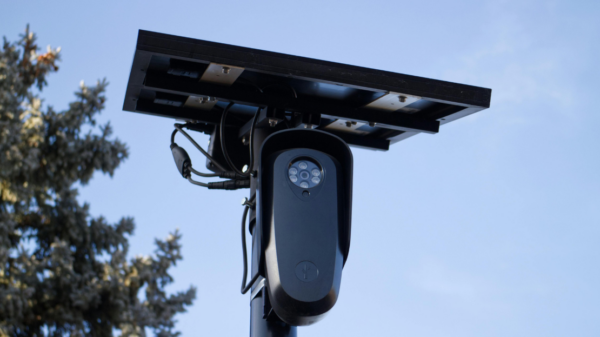
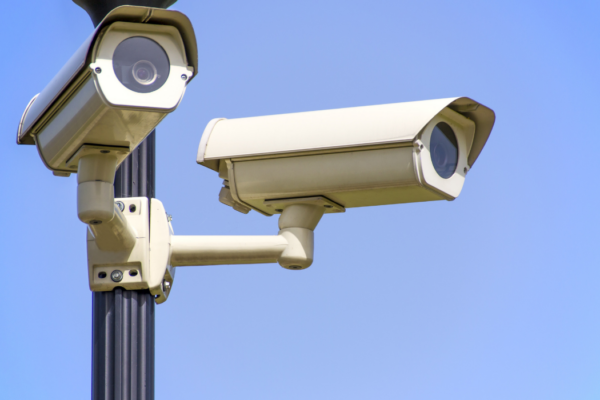

Next time you’re stopped at a red light, look up at the intersection. Perched on stoplights, bridges, and overpasses, you may notice cameras called automatic license plate readers (“ALPRs”), which capture driver location information from every passing car.
These cameras are not like normal traffic cameras. They record and track every car that comes into their view, while an artificial intelligence (“AI”) algorithm catalogs the make, model, color, license plate number, and even bumper stickers. That personal information flows into a database that any law enforcement agency with a Flock contract can share with other agencies – including with federal agencies like Immigration and Customs Enforcement (“ICE”) – who can then rummage through that personal information with little oversight.
By collecting, retaining, and sharing detailed information about our routines and movements, ALPRs paint a detailed picture of our private lives for law enforcement or private companies: where we work, live, worship, protest, or obtain health care. These mass surveillance systems have already been abused to help ICE target immigrants, to disproportionately target minority communities, to track people seeking reproductive health care, and by individual officers to stalk romantic partners.
In short, ALPRs threaten our civil rights. We are working hard to stop these surveillance dragnets—and those who use them— from capturing Californians’ location information, illegally sharing it, and accessing it without a warrant. We are encouraged that communities have started demanding accountability from their policymakers and that some cities canceled their ALPR contracts as a result.
But what if ALPRs could be even worse? What if they could capture not only license plate numbers, but every electronic signal you emit, regardless of whether or not you are driving?
This is the question the surveillance technology industry is racing to answer. Surveillance vendor Leonardo has started pushing a product called SignalTrace, marketed specifically to police, which would add new sensors to ALPR cameras to detect, collect, and store electronic information from almost every personal device you carry with you. All without a warrant.
This sort of surveillance dragnet would allow SignalTrace to effortlessly target and track individual drivers, riders, and even pedestrians. According to the company, "[w]hen multiple devices consistently move together with a vehicle, SignalTrace’s algorithms link them to that vehicle’s license plate and time-stamped location data." That means from mobile phones to fitness trackers, from Bluetooth headphones to smartwatches, from tire pressure sensors to pet microchips, if SignalTrace picks up a signal from a device within your vehicle, it logs that information to a profile connected to your vehicle. This wealth of personal information allows Leonardo to create a unique "electronic fingerprint" for each individual, which it can then sell to law enforcement, border security, and other government agencies.
SignalTrace and products like it supercharge the civil rights risks we already face from ALPRs. By collecting even more information than traditional ALPRs and by explicitly generating profiles on individuals rather than vehicles, these products threaten constitutional rights guaranteed by the California Constitution and U.S. Constitution, including the right to privacy and the right to be free from unreasonable searches and seizures.
The U.S. Supreme Court reaffirmed those rights in the digital age. In the recent U.S. v. Chatrie case, the Court said a person’s location history is protected against unreasonable search and seizures. The majority opinion explained “society’s expectation has been that law enforcement agents and others would not—and indeed, in the main, simply could not—secretly monitor and catalogue every single movement of an individual’s car . . . A new technology should not transform what individuals had reasonably thought they could withhold from the Government.” In short, new technologies like ALPRs and SignalTrace do not change our reasonable expectation of privacy under the Constitution. We have rights and must defend them.
So, what can we do about law enforcement and surveillance companies’ apparently endless hunger for our personal information? Policymakers must consider the legal risks posed by surveillance technology and understand that these trackers will harm rather than help our neighborhoods. Communities should push back against the adoption of this incredibly harmful surveillance technology and remember that surveillance is not safety.
The ACLU of Northern California, ACLU of Southern California, the ACLU national office, and many others have resources you can use to advocate for your rights in your own communities. Meanwhile, we will continue to watch surveillance companies as they watch us. We'll be ready to defend Californians' right to travel safely without fear that out-of-state authorities will be able to track our every move.