
Court Cases
All Cases
31 Court Cases
Jun 26, 2026

American Civil Liberties Union of Northern California v. Vallejo Police Department (Police misconduct)
The ACLU of Northern California filed a lawsuit to compel the city of Vallejo to release public records that contain information about officers in the Vallejo Police Department who allegedly bent their badges after on-duty shootings as a badge of honor. Following litigation, the City of Vallejo was forced to release a long-suppressed third-party investigation into the allegations.
Jun 24, 2026

Pablo Sequen, et al. v. Albarran, et al.
We filed a class-action lawsuit challenging the Trump administration's policy of arresting immigrants when they appear for court in Northern California and holding them in inhumane conditions inside the San Francisco ICE field office.
May 4, 2026

John Doe v. Markwayne Mullin
The ACLU Foundation of Northern California and the ACLU of the District of Columbia sued the U.S. Department of Homeland Security (DHS) over its unlawful attempt to obtain from Google the personal and location information of a Canadian citizen who has posted content critical of the Trump administration online.
This case is among a large number of instances of social media critics who have been targeted by DHS. Since the start of the second Trump administration, social media platforms have received hundreds of similar government demands for information designed to chill speech the government doesn’t like. Our lawsuit asks the court to rule that DHS is exceeding its legal authority by demanding vast swaths of personal information about the plaintiff, including his name, where he lives, extensive information about his physical movements, and detailed records about the websites he visits and the people he communicates with online.
On his social media accounts, the plaintiff, John Doe, who uses a pseudonym to protect his privacy and family, regularly posts strongly worded criticisms of President Trump and his policies. In February, DHS issued an administrative demand to Google to release his personal information shortly after he posted online criticism of the killings of Renee Good and Alex Pretti by federal agents in Minneapolis.
The attempt to force Google to turn over information about Mr. Doe far exceeds DHS’s legal authority, which the agency issued without any involvement from a court, citing a customs enforcement law. Mr. Doe, a Canadian citizen who resides in Canada, has not entered the U.S. since 2015.
The ACLU of Northern California, the ACLU of Pennsylvania, and the ACLU national organization have filed three other cases challenging similar abuses, but DHS withdrew those subpoenas before a judge could rule on their legality.
This lawsuit, filed in the Northern District of California, goes a step further than previous challenges. It asks the court to not only invalidate this summons, but also make clear that the government may not use its customs enforcement authority to attempt to identify and intimidate its critics.
Apr 15, 2026
Mullin v. Dahlia Doe
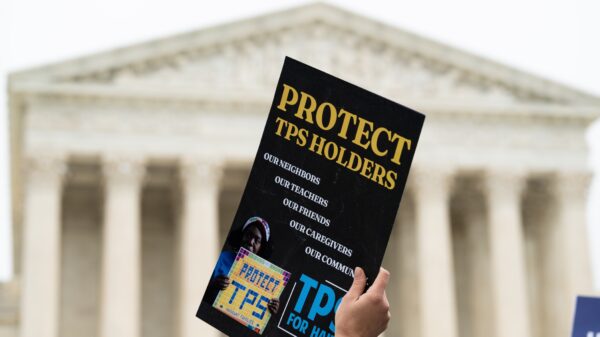
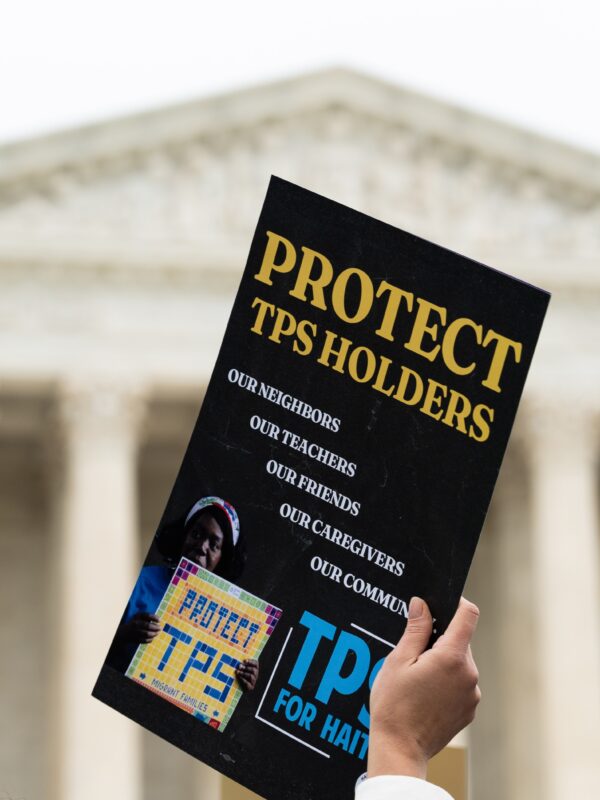
Mullin v. Dahlia Doe challenged the Trump administration’s decision to terminate Temporary Protected Status (TPS) for thousands of Syrian immigrants living and working legally in the United States while it is unsafe for them to return to their home country. The case was consolidated with Trump v. Miot, a case concerning Haitian TPS holders. The Supreme Court expedited the case for judicial review, granting certiorari before judgment based on a preliminary ruling from the district court.
In its Supreme Court’s June 25, 2026 6-3 ruling, the Court allowed the TPS terminations of Syria and Haiti to proceed, resulting in the loss of legal status and the right to work for over 350,000 people. The Supreme Court held that there was no judicial review for the plaintiffs’ statutory claims; and that the constitutional equal protection claim was unlikely to succeed on the merits.
TPS is a program established by Congress in 1990 to protect individuals who cannot safely return to their home country due to war, natural disaster, or other emergencies. TPS holders are mothers, fathers, workers, and contributing members of their communities. They rely on this humanitarian protection regime for safety.
The Supreme Court’s ruling impacts not only Syrian and Haitian TPS holders but all 1.3 million individuals from 17 countries designated for TPS. At the time the Supreme Court heard this case on April 29, 2026, the Trump administration had terminated TPS for 13 countries—despite ongoing wars and undisputed humanitarian crises.
Alongside our co-counsel the International Refugee Assistance Project (IRAP), Muslim Advocates, Van Der Hout LLP, and the National ACLU, the ACLU of Northern California represents seven Syrian nationals with TPS or pending applications in Mullin v. Dahlia Doe, a class action lawsuit originally filed in October 2025. Cancelling TPS designation for Syria subjects nearly 6,100 Syrian TPS holders, along with 800 Syrians with pending applications, to immigrant detention and possible deportation to an unsafe country. The Miot case, consolidated with Doe, affects 350,000 Haitian TPS holders.
The plaintiffs argued that the DHS Secretary does not have the legal authority to unilaterally override the TPS statute enacted by Congress, and that it is the role of the judiciary to review the government’s legally dubious actions. The Supreme Court adopted the government’s extreme position that even lawless decisions that violated clear statutory mandates were not reviewable.
Jan 21, 2026

Schmitz, et al. v. Permit Sonoma, et al.
The ACLU Foundation of Northern California filed a lawsuit to block Sonoma County code inspectors from using drones to conduct surveillance of people's homes without a warrant.
Jan 21, 2026
San Francisco Tenants Union, et al. v. Smart Rent, et al.
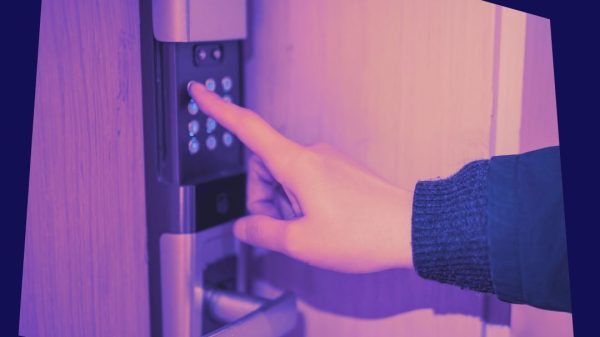
The ACLU’s lawsuit in San Francisco Superior Court seeks to protects tenants' privacy rights from landlords who force renters to allow AI-powered surveillance technology in their homes. In multiple residential buildings across San Francisco, landlords have forced tenants to accept so-called “smart home” systems that monitor their comings and goings and other behavior. They're using tenants’ personal information to track them, potentially even profiling their behavior with AI tools built specially for landlords.
Jan 20, 2026

SIREN, et al. v. City of San Jose, et al.
The ACLU of Northern California and the Electronic Frontier Foundation filed suit in Santa Clara County Superior Court against the City of San Jose and others to challenge San Jose police officers’ practice of searching for location information collected by automated license plate readers (ALPRs) without first getting a warrant.
Oct 11, 2025
Garro Pinchi, et al. v. Noem, et al.
We filed a class-action lawsuit challenging the Trump administration's policy of re-arresting and re-detaining immigrants the government previously had released from custody after concluding they were neither dangerous nor a flight risk.
Jul 9, 2025
National TPS Alliance v. Noem (NTPSA II)
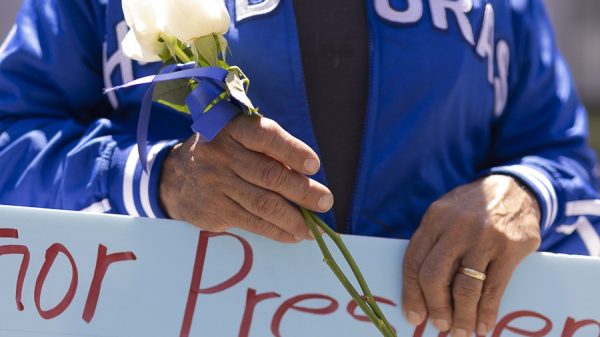
National TPS Alliance v. Noem (NTPSA II) is a legal challenge to the Trump administration’s unlawful efforts to dismantle the statutorily mandated Temporary Protected Status (TPS) program for Nepal, Honduras, and Nicaragua, which provides humanitarian protection for people who cannot safely return to their home countries.







Stay Informed
Sign up to be the first to hear about how to take action.
By completing this form, I agree to receive occasional emails per the terms of the ACLU’s privacy statement.
By completing this form, I agree to receive occasional emails per the terms of the ACLU’s privacy statement.