ACLU NorCal is pushing Sacramento city leaders to adopt stricter policies that prevent police from making racially discriminatory traffic stops. The ongoing campaign comes on the heels of the organization’s recent analysis of traffic stop data, Driving While Black and Brown: The Case for Banning Racially Biased Traffic Stops in Sacramento, which found that Black drivers in the city accounted for roughly 33% of stops by Sacramento police, even though they only made up about 12% of the city’s population.
Most of these stops were for minor vehicle equipment or non-moving violations that pose little public safety risk—like tinted windows or expired registration tags.
Following stops, Sacramento police were also significantly more likely to search Black and Latino motorists, according to the data, which was collected through California’s Racial and Identity Profiling Act (RIPA). ACLU helped write and pass that law in 2015, following over two decades of advocacy.
ACLU NorCal Senior Organizer Carlos Montes-Ponce observed that such stark racial disparities underscore the urgency of the campaign.
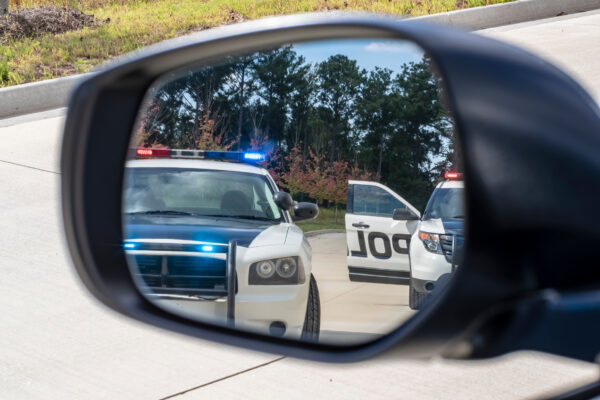
“This is an ongoing trend,” he said, noting that racial bias often comes into play when police use non-safety related traffic violations as a “pretext” to look for evidence of criminal activity.
Targeting Black and Latino drivers for minor violations like tinted windows is basically stop-and-frisk for driving.”
Pretext stops can also unjustly funnel people into the criminal justice and immigration enforcement pipeline, Montes-Ponce noted.
“What may start as a tinted window issue can easily become something much larger,” he said.
When Montes-Ponce’s team began hosting community events about pretext stops earlier this year, the findings confirmed what residents already knew. “None of this data surprised them,” he said. “What was shocking for them is why hasn’t anything been done?”
Following the lead of cities like San Francisco and Berkeley that have limited enforcement of non-moving traffic violations, ACLU NorCal’s criminal justice team started mapping the local policy landscape in Sacramento. What they found was a yawning gap: The city had no strict policies limiting pretext stops or Fourth Amendment search and seizures.
ACLU NorCal then collaborated with district officials, local activists, and the city’s police oversight committee to host in-person events in the districts with the highest rate of pretext stops. The campaign also recently launched an on-the-ground canvassing effort in those communities and has expanded outreach to additional districts to consolidate support for the issue.
“It’s a matter of political will,” said Montes-Ponce, who is optimistic the City Council will take up the issue this year. “I think there is a good chance if the community comes out and supports it.”
Learn more by reading our report, Driving While Black and Brown: The Case for Banning Racially Biased Traffic Stops in Sacramento.