
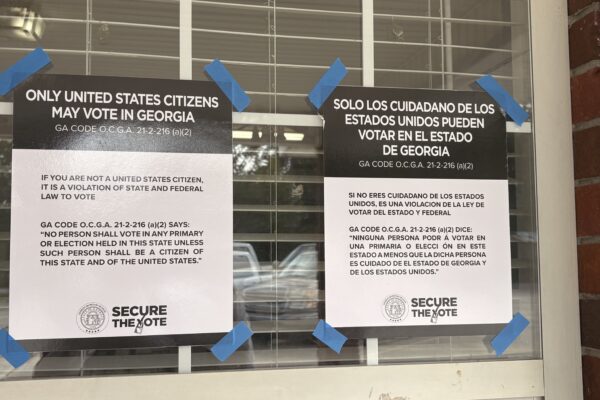
During this past election season, the ACLU left no stone unturned to ensure free and fair elections. To that end, the organization ran an election protection program in four battleground states: Georgia, Michigan, Pennsylvania, and Texas with support from staff from across the country who worked with the local affiliates. Investigator, Hannah Beazley; Director of Administration, Ashley Morris; General Counsel, Elise Traynum; and I represented the ACLU of Northern California in Savannah, Georgia.
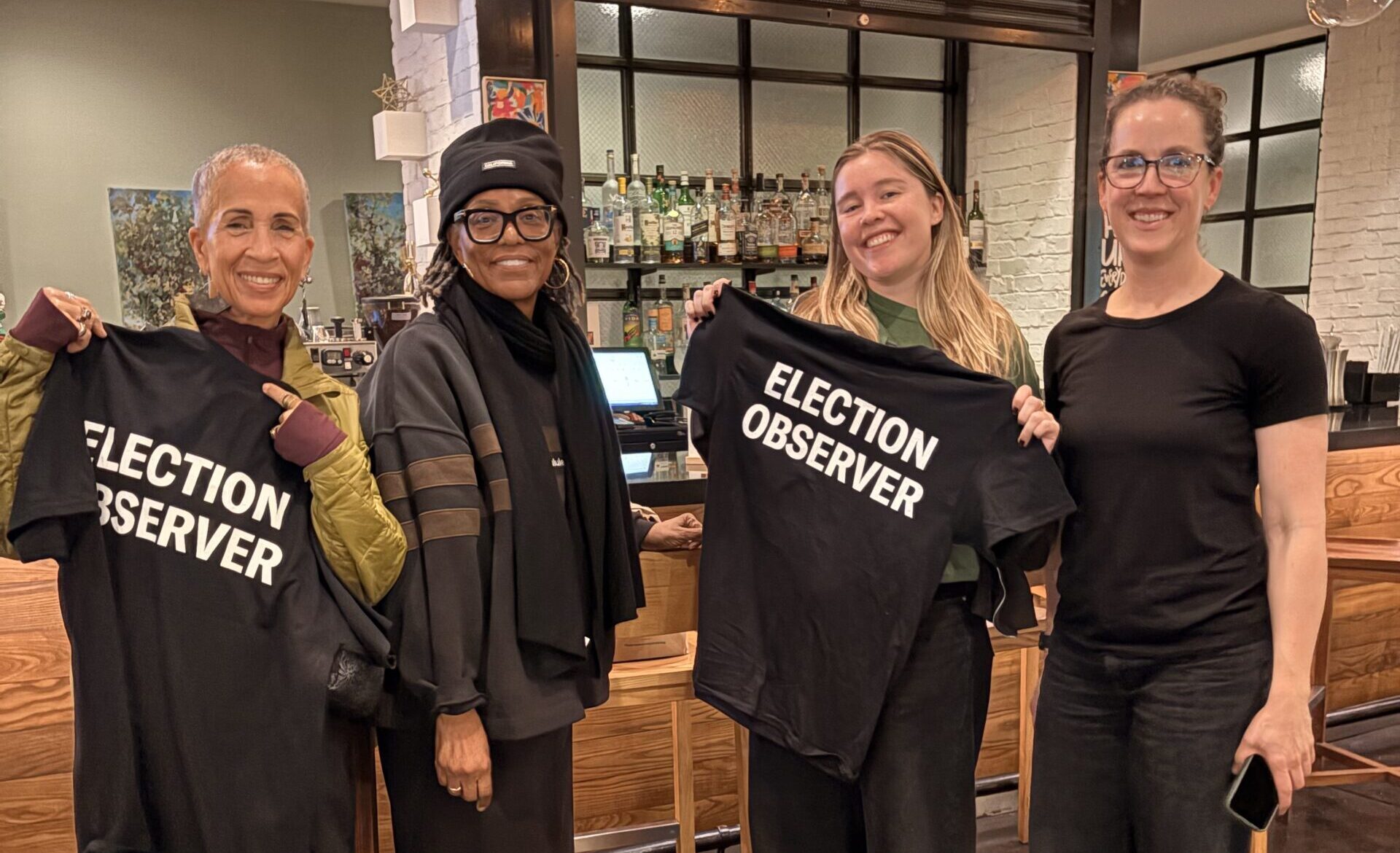
With guidance from the national ACLU’s Affiliate Support and Nationwide Initiatives department and the ACLU of Georgia, the four of us were assigned to poll watch on Election Day, observe tabulation meetings once voting ended, and attend county certification meetings in the days following the election. Our tasks included determining whether signage was visible and posted correctly, observing compliance with distance and accessibility regulations, and evaluating the potential for voter disenfranchisement. Essentially, we were there to ensure that the election occurred without interference. After a 12-hour shift monitoring activity at the polls, we concluded that, for the most part, voters in Savannah and the surrounding communities were able to vote without any problems. However, we each came away with distinct impressions of our time in Georgia.
At a community center in Bloomingdale, a small town outside Savannah, Hannah and I were greeted with southern hospitality and kindness when we arrived wearing our black “Election Observer” T-shirts.
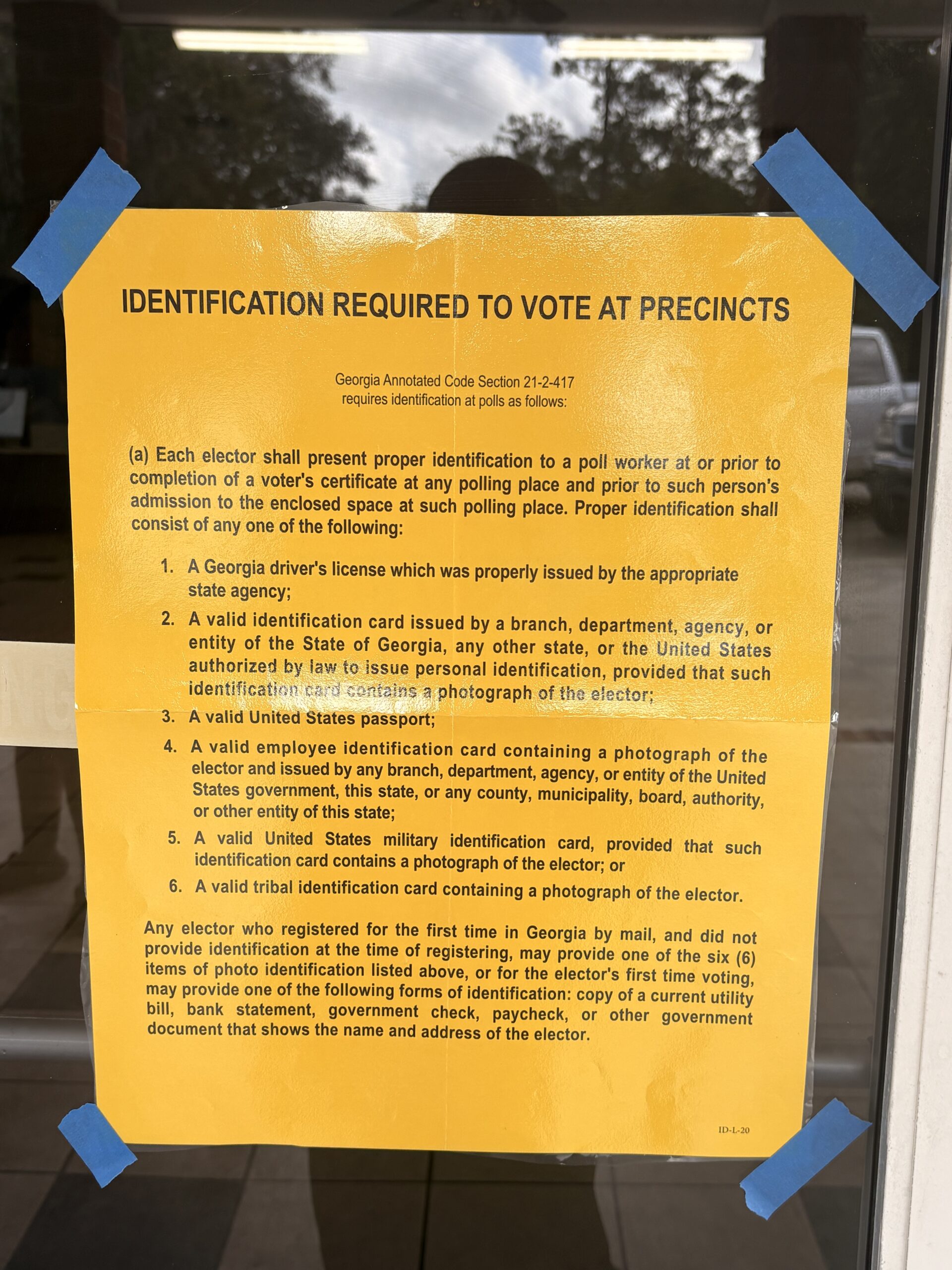
At one polling place, Ashley saw voters who showed up twice, presumably because they didn’t have the proper ID, which is required to vote in Georgia. The fact that people returned was a testament to their determination to exercise their right to vote, but she wondered how many of those who were turned away decided not to come back. She also reflected on the fact that while some states have curtailed voting rights, California has made it easier to vote by establishing policies such as same-day registration and universal vote by mail.
Elise resonated with the joy of young voters, especially young and maybe first-time Black voters, who were jubilant when they left the polling center. They posed for selfies and group photos showing off their “I voted” stickers. Given the historic victories in Georgia, it’s plausible that these young people were particularly inspired by the slate of diverse candidates. It certainly didn’t hurt that a DJ performed outside that center for a few hours!
I was struck by the simplicity of the act of voting in proportion to the enormity of the weight each vote carried. For twelve hours we watched people show up and perform their civic duty. From the early risers who lined up at 7:00am to men in big trucks and construction gear who made it to the polls in the final minutes before polls closed at 7:00 p.m., the voters that day symbolized a collective commitment to democracy—an inherent belief that voting matters.
At a time when voting rights are under attack across the country, the significance of being in the south, in Georgia, wasn’t lost on us. It was remarkable to be in a state where just over sixty years ago blood was shed in the fight to pass the Voting Rights Act. Yet on Tuesday, November 3, 2026, Georgia made history and elected the first Black woman governor in the nation. The lesson for all of us is to remain vigilant. To quote the late and great John Lewis, “The power of the people is greater than the people in power.”