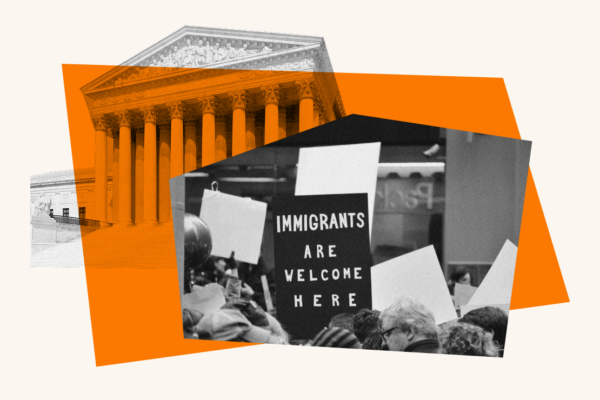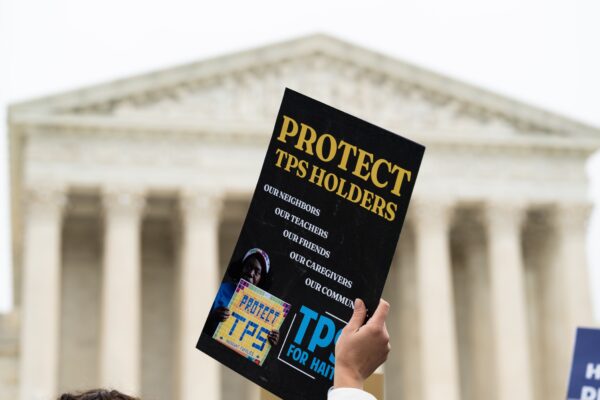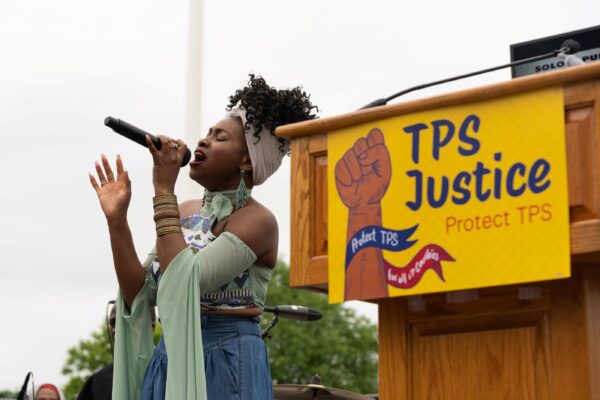
I’m an investigator for the ACLU and a member of the legal team challenging the Trump administration’s termination of a humanitarian program called Temporary Protected Status. My work as a civil rights investigator is to make a record of the harm caused by unlawful government action. I’ve spent the past year speaking with people whose lives have been upended by the termination of TPS. And this Wednesday, April 29, I will be at the Supreme Court standing alongside TPS holders to defend this critical program.
Temporary Protected Status, or “TPS” as the program is often referred to, is a humanitarian program that grants protections to live and work to non-citizens already in the United States when their own countries become too dangerous to return to due to armed conflict, natural disasters, or other humanitarian crises.
The program is “temporary” in that it doesn’t provide a pathway to permanent status. Instead, the government must review the designation every 18 months and extend protections to TPS holders if the country remains unsafe.
In the past, TPS was administered as Congress intended—without regard to politics. Sending TPS holders to unsafe countries destabilized by war or other crises is illegal. It was also seen as contrary to our values, and TPS extensions were routinely granted when the countries remained unsafe.
Those were the before times. Trump made clear—long before he was back in office—that he intends to dismantle the program entirely, without regard to the law.
One by one, the government has terminated TPS designations for every single country that has come up for periodic review. Venezuela—terminated. Haiti—terminated. Syria, Afghanistan, South Sudan, Nicaragua, Nepal, Honduras, Ethiopia, Burma, Cameroon—all terminated.
Lawyers across the country rushed to challenge each of these terminations. In case after case, federal judges have recognized the TPS terminations as illegal. Still, the Government insists it can do what it wants, and that the courts have no say. So now, we’re headed to the Supreme Court.
As the battle for the future of the TPS program has been raging in the courts, hundreds of thousands of smaller battles have been playing out every day, in every city and every state, as TPS holders and their families struggle with the reality of being stripped of the basic protections on which they rely. Here are just a few of those stories.
Jhony, 30, from Honduras
Jhony is a plaintiff in the one of our lawsuits. He’s 30 years old and lives in the San Francisco Bay Area. Bearded, with wire-rimmed glasses and an easy smile, Jhony carries himself with a gentle openness that puts others at ease. He lights up when he speaks about his 9-year-old child, Alex.

Jhony, age 6, at Chuck E. Cheese in Fremont, CA
Jhony has lived in the U.S. since he was three years old. He and his family were granted TPS after Hurricane Mitch devastated Honduras in 1998. He had what he describes as a normal American childhood, raised in a tight-knit, religious family. His younger sister was born in the U.S. and is a citizen, and his parents became green card holders a few years ago. Jhony is the only member of his family who has been unable to secure permanent status.
Still, TPS provided Jhony with the ability to live and work safely in the U.S., so long as he reapplied every 18 months and followed the laws—anything more than a single misdemeanor renders a person ineligible for TPS.
Jhony followed his mother’s footsteps into the healthcare field, working as a Certified Nursing Assistant in the cardiac unit at Stanford Hospital. “I treat all of my patients the same, no matter who they are or where they are from,” he says. “I know that a little kindness can make a big difference in a person’s life when they’re going through a difficult time.” Meanwhile, Jhony was also taking classes to fulfill prerequisites for nursing school with the goal of becoming a R.N., and spending most of his free time with his family, especially Alex.
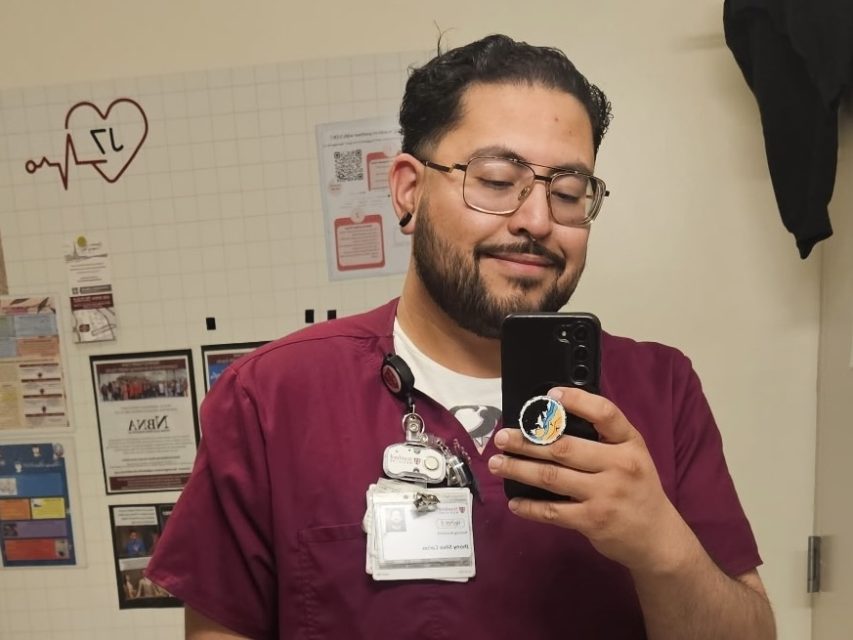
Jhony at work as a certified nursing assistant at Stanford
In September 2025, TPS for Honduras was terminated. “Everything came crashing down,” says Jhony. He lost his job at Stanford and was forced to drop out of his college courses because he could no longer afford tuition. Now, Jhony feels like his entire life has been put on pause. “I can’t make plans, and I can’t move forward. Everything I’ve worked so hard for has been taken away,” he says. Now relying on the support of friends and family, Jhony is struggling with anxiety about what the future holds for him and his child. “I can’t go back to Honduras, my whole life is here,” he says.
Around January, Jhony received a letter from the DMV directing him to come into the local office to surrender his REAL ID. “It was really jarring to get that letter,” he said, “and it made the loss of TPS feel very real… my ID was being taken away.”
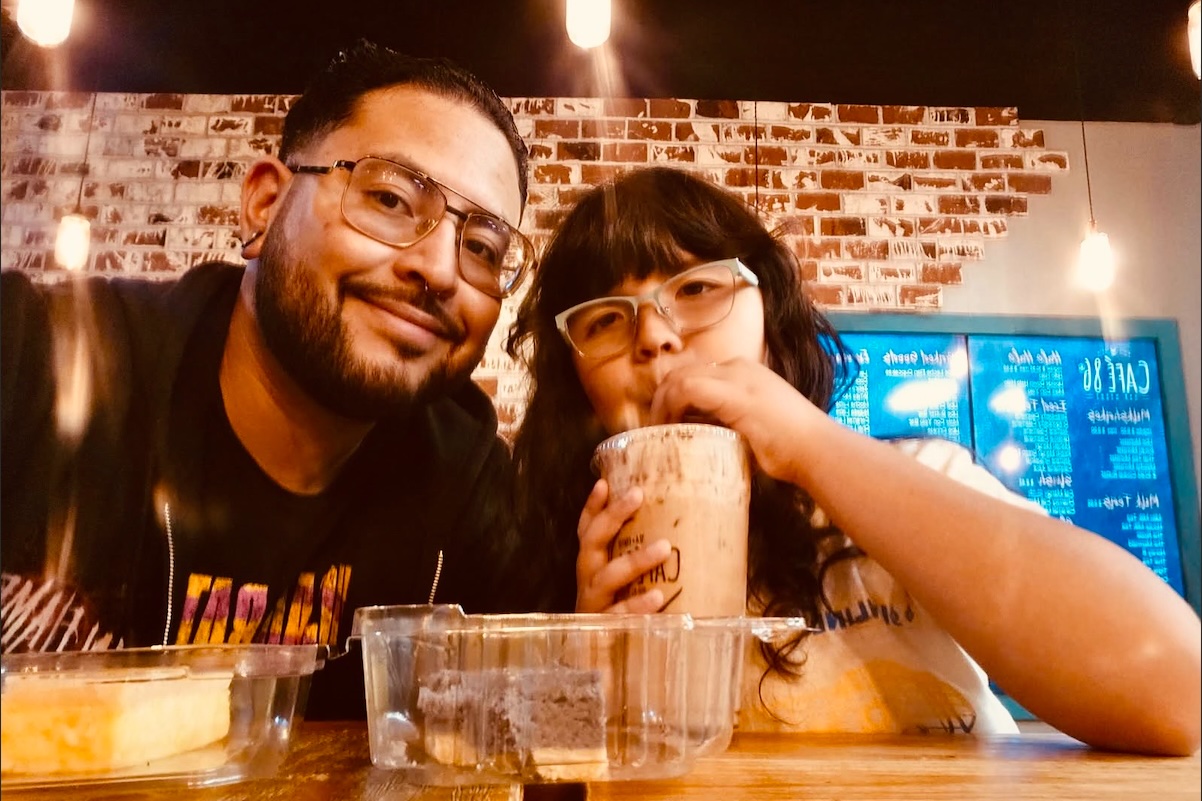
Jhony and Alex, 2025
Now, Jhony has been living without the protection of TPS for the last several months. “I feel vulnerable in a way that I didn’t feel before,” he says. “There is a constant worry in the back of my mind.” Recently, I asked whether Alex understands that Jhony’s loss of immigration status places him at risk. Jhony paused before answering, “I tell them not to worry, I’m not going anywhere… I have to believe that for myself too.”
Walkelis, 24, from Venezuela
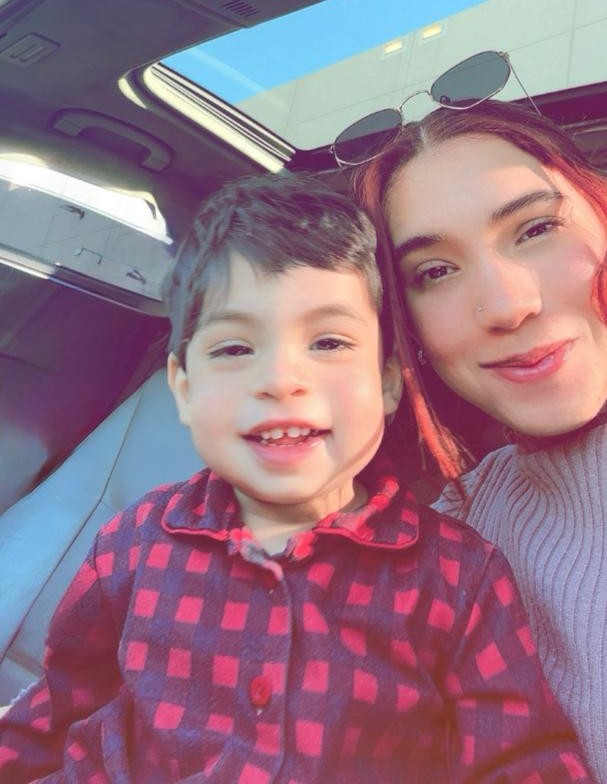
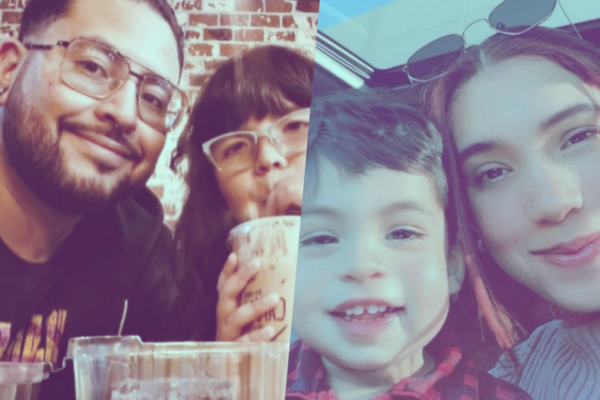
Walkelis and André, January 2025 in Carrollton, Texas
I first spoke with Walkelis in July 2025, after the Supreme Court allowed the termination of TPS for Venezuela to go into effect. At that time, Walkelis was living in Texas with her spouse and their two-year-old son Andre, who is a U.S. citizen.
After TPS for Venezuela was terminated, ICE required Walkelis to check in more frequently. Then, they fitted her with a GPS ankle monitor, which caused her physical and emotional discomfort.
Amidst the uncertainty and fear surrounding her immigration status, Walkelis also shared concerns about her son’s development. Then two years old, Andre still wasn’t speaking. Her son was in the process of being evaluated by a speech therapist and a neurologist. But Walkelis’s biggest fear was of being detained, separated from her U.S. citizen child, and deported to Venezuela.
Devastatingly, that is precisely what happened. Two days after Christmas, I received a short email from Walkelis. “This is Walkelis,” she wrote. “I’m not sure if you remember me.” She told me that she had been arrested by ICE in August and was later deported to Venezuela—without her son.
We recently spoke over the phone. Walkelis has now been separated from her son for more than eight months, a situation she describes as unbearable. “He doesn’t seem to recognize me anymore,” Walkelis says through tears.
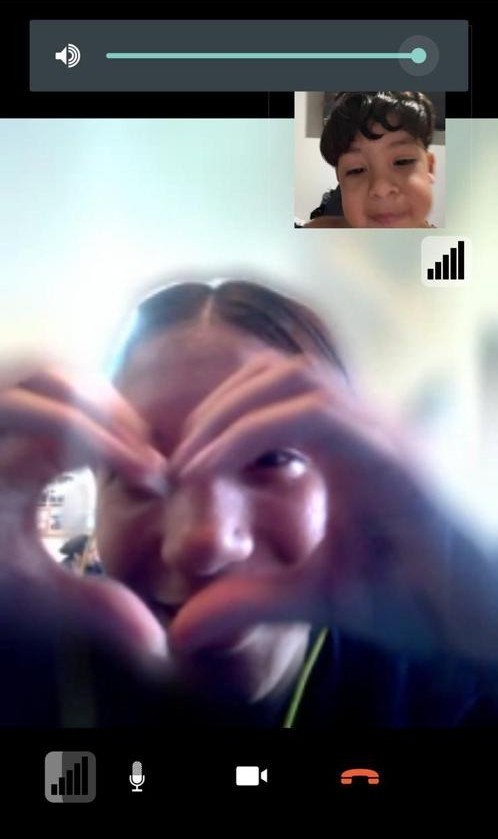
Screenshot of video call between Walkelis and her son from Karnes County Immigration Detention Center in October 2025
Walkelis explained that she had been arrested at an ICE check-in and sent to Bluebonnet Detention Facility. The same week that Walkelis was arrested, the family received Andre’s diagnosis—level 3 autism, the most severe form—which involves significant behavioral deficits and impairments in communication and requires substantial intervention and treatment.
The next four months in immigration detention were horrific. On top of the overcrowded conditions, lack of nutritious food, and stressful environment, the separation from her young son was agonizing. ICE officials assured Walkelis that if she agreed to a “voluntary departure”—meaning she would not contest her removal in court—she would be permitted to bring her son along with her. Instead, in early December immigration officers woke her up in the middle of the night and forced her onto a plane without her son. “There was nothing I could do,” Walkelis said.
Since being separated from his mother, her son has not been receiving the treatment he needs to help him develop language and other crucial skills. His father has also lost his legal status, and with it his job and apartment. Her son and his father now live in a room in another family’s house, and his father takes the toddler to do odd jobs to make ends meet.
The family is now facing an impossible decision: an indefinite separation or reuniting in Venezuela where her U.S. citizen child will be deprived of the essential care he needs due to the country’s ongoing and overlapping crises. “I am living a nightmare that I cannot wake up from,” says Walkelis.
Penelope, 48, from Nicaragua
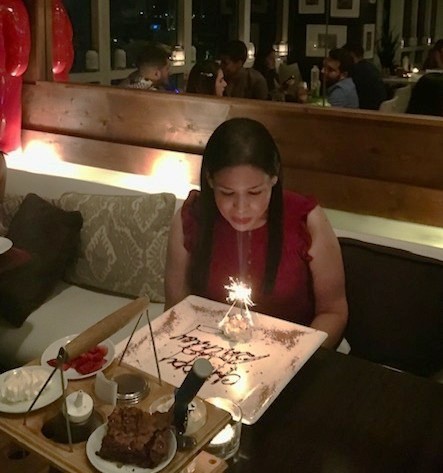
Penelope celebrating her 43rd birthday with family
Penelope, who asked to be identified by a nickname to protect her safety, was 19 years old when she first arrived in the United States. “I’ve lived here my whole adult life,” she explains. When her home country of Nicaragua was ravaged by the same hurricane that hit Honduras in 1998, her entire family was displaced. “Returning home was not an option,” she says.
TPS allowed Penelope to build a life in the United States that she felt proud of: she obtained an associate’s degree and established a successful career in the insurance industry, earning several professional certificates, and working her way up to a position as sales manager for a major national insurer.
Penelope’s life has not been without struggles, even before TPS was terminated. She tried to go back to school to earn her bachelor’s degree but found that she was ineligible for in-state tuition because of her status. In her 30s, she suffered a major health crisis that left her unable to have children. “I always wanted to be a mom,” Penelope told me in her lightly accented English. “But that wasn’t part of God’s plan.”
Penelope lives with her mom and brother, who are both U.S. citizens. Her brother was born with a rare genetic condition that causes blindness and major developmental and cognitive delays. “He requires help with nearly every aspect of daily life,” Penelope explains. In addition to caring for his day-to-day needs, Penelope provides critical support by navigating his medical care and education. “I’m the only one in my family who speaks English, so I am the one who is responsible for managing his care,” she states.
In September, when Penelope and I first spoke, TPS had recently been terminated for Nicaragua and the loss of lawful status and work authorization was starting to sink in. Fiercely independent and equally devoted to her family, the loss of TPS meant that she could no longer function in her role as a provider and protector for her family. Penelope lost her job, and with it the social support of her coworkers. When her work permit was cancelled, so was her driver’s license and professional license. She also lost her employer-sponsored healthcare, and now has to pay out-of-pocket to maintain essential coverage for her ongoing medical needs.
For the last seven months, Penelope has been living off her life’s savings, hoping that she can literally buy enough time until she is able to apply for permanent status. Her mother filed a visa petition for her in 2016, but Penelope has been stuck on a years-long waitlist for family visas. “I was months away from being eligible for a green card,” she says. But then, in January 2026, the Trump administration announced a blanket ban on the issuance of visas to Nicaraguan citizens. Now, the green card she has been waiting for is out of reach. “It’s like every door is being slammed shut in my face.”
On April 29, the Supreme Court will consider whether the Trump administration can slam the door shut on Temporary Protected Status and the laws written to protect people like Penelope, Walkelis, and Jhony. For the 1.3 million people who rely on TPS—and for all of us who recognize ourselves and our shared humanity in these stories—the stakes could not be higher.