
News & Commentary
ACLU Suit Shows the DOJ Gathered Location Data Without Probable Cause
After three years of litigation, we’ve finally settled a portion of one of our long-running Freedom of Information Act suits against the federal government for information about its location tracking practices. A person’s digital location information reveals detailed, private information that the government should only be able to get through a warrant based on probable cause. As part of this settlement, the government provided us with information about the types of court orders it obtains to get location information.

San Jose's New Surveillance Proposal is Garbage
What if once a week the police drove by your home and took a picture?

Those "Personal" Email Accounts? If it's Official Business, it's a Public Record
Public-records laws are designed to ensure that constituents and journalists have access to information on public affairs. They protect a bedrock value of our democracy: transparency.

Surveillance Technology: It's Not Just About Snowden
For communities of color, surveillance isn't just an invasion of personal privacy, it’s a tool for high tech racial profiling that can have disastrous and fatal consequences.

California Federal Judge to Government: Get a Warrant for Cell Phone Location Data
A federal district court held that the government must obtain a warrant to obtain historical cell phone location data. This important ruling makes it clear that we don’t have to give up privacy to participate in modern society.

Courts in California Demand Warrant for Cell Phone Location Information
The ACLU of Northern California has joined the Federal Public Defender’s Office and the Electronic Frontier Foundation in supporting a warrant requirement for access to cell phone location information.

San Francisco Needs to Take a Closer Look at Its Body Camera Plan
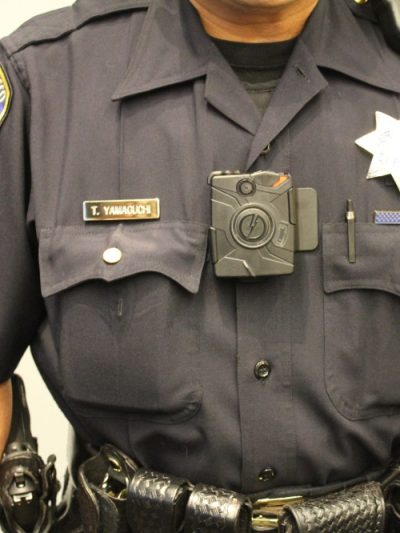
San Francisco, like many local communities, is considering the use of police body worn cameras, and the Board of Supervisors recently allocated $6.6 million for their purchase pending approval of a use policy. But for body cameras to deliver on their promise of accountability and promote public trust, there must be transparency and public trust in both the process that leads to a decision to adopt them and the policy that may ultimately govern their use. That's why the ACLU of California, joined by the Council on American-Islamic Relations and Color of Change, sent a letter today detailing our concerns with the transparency and effectiveness of the process so far and the provisions of the July 9, 2015 draft policy.
New Bill Would Force Companies to Report "Terrorist Activity" to the Government
If there’s one thing the First Amendment stands for, it’s that vigorous debate about the issues of the day—even, and perhaps especially, uncomfortable debate about things like racism or terrorism—should be free from government interference. Tragically, that principle has been betrayed repeatedly over the past decade and a half, as law enforcement agencies continue to single out individuals for scrutiny based on speech or association protected by the First Amendment.
With DAC Vote, Oakland Shows How Surveillance Reform Begins at Home
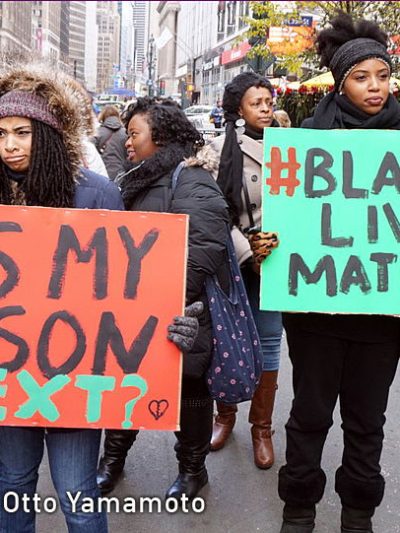
Last week wasn’t just a big one for NSA reform – it also found one of California’s largest cities rolling back warrantless surveillance by local law enforcement. With a unanimous vote, the Oakland City Council adopted a privacy policy for its port-centered surveillance project known as the Domain Awareness Center (DAC) and created a new committee to address citywide surveillance reform, including a potential surveillance ordinance. Oakland’s move represents a sea change in how California communities address surveillance practices that all too often target low-income and people of color. We encourage other communities to follow suit.

Stay Informed
Sign up to be the first to hear about how to take action.
By completing this form, I agree to receive occasional emails per the terms of the ACLU’s privacy statement.
By completing this form, I agree to receive occasional emails per the terms of the ACLU’s privacy statement.