
News & Commentary

Amazon’s Disturbing Plan to Add Face Surveillance to Your Front Door
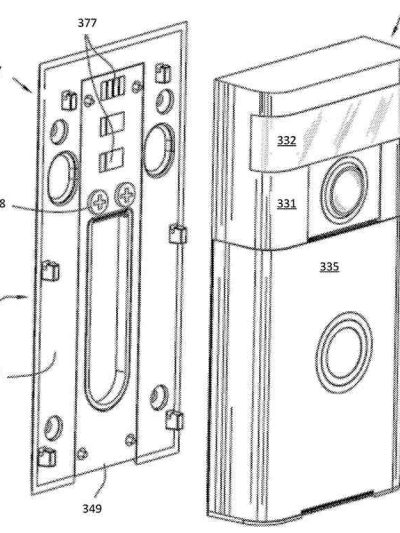
Recently, a patent application from Amazon became public that seeks to pair face surveillance — like Rekognition, the product that the company is aggressively marketing to police and Immigration and Customs Enforcement — with Ring, a doorbell camera company that Amazon bought earlier this year.
While the details are sketchy, the application describes a system that the police can use to match the faces of people walking by a doorbell camera with a photo database of persons they deem “suspicious.” Likewise, homeowners can also add photos of “suspicious” people into the system and then the doorbell’s facial recognition program will scan anyone passing their home. In either case, if a match occurs, the person’s face can be automatically sent to law enforcement, and the police could arrive in minutes.
By Jacob Snow
Secret Service Announces Test of Face Recognition System Around White House
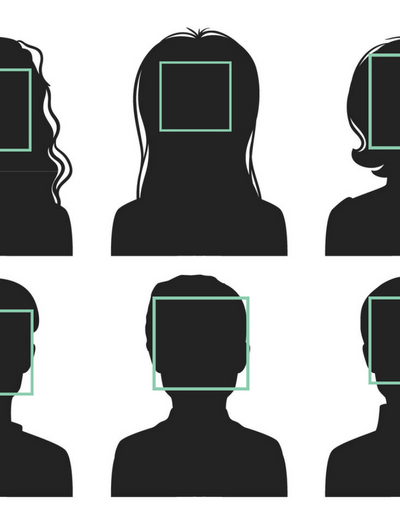
In yet another step toward the normalization of facial recognition as a blanket security measure, last week the Department of Homeland Security published details of a U.S. Secret Service plan to test the use of facial recognition in and around the White House.
According to the document, the Secret Service will test whether its system can identify certain volunteer staff members by scanning video feeds from existing cameras “from two separate locations on the White House Complex, and will include images of individuals passing by on public streets and parks adjacent to the White House Complex.” The ultimate goal seems to be to give the Secret Service the ability to track “subjects of interest” in public spaces.
By Jay Stanley
Prisoners Are Getting Paid $1.45 a Day to Fight the California Wildfires
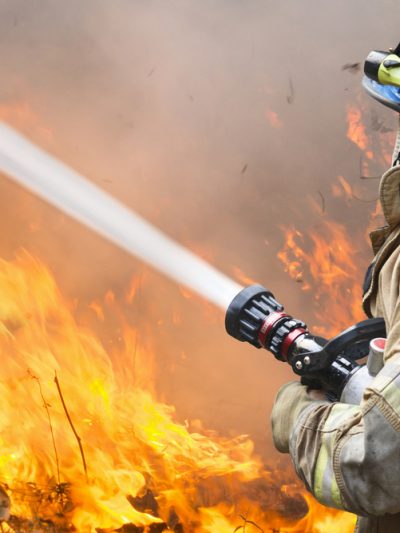
As firefighters in California battle the deadliest wildfires in the state’s history, they are joined by unlikely allies against the blaze. About 200 prisoners in California’s Conservation Camp program are fighting the fires alongside civilian employees, earning just $1.45 a day for their work. Their pay as workers is a fraction of minimum wage. The hazard to their lives is real, as evidenced by a death toll that has climbed steadily.
The prisoners battling the fires in California deserve real wages. And their rights as workers lead us to larger issues of prison labor, fires or not.
By David Fathi
Federal Judge Blocks President Trump’s Illegal Asylum Ban
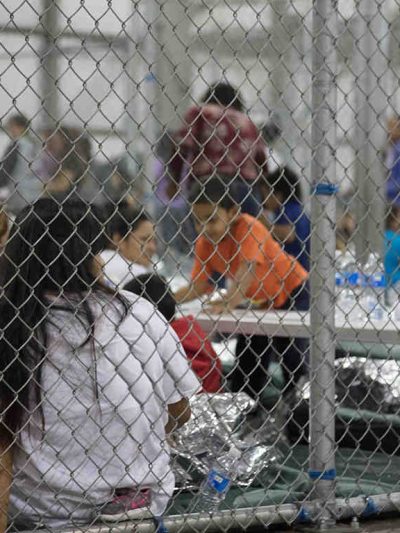
UPDATE, Nov. 20, 2018: Late Monday night, a federal judge issued a temporary restraining order blocking President Trump’s asylum ban while the suit moves forward. The order will be in effect until Dec. 19 at least, when there will be another hearing on the ban. In his order, Judge Jon S. Tigar of the U.S. District Court in San Francisco wrote, “The rule barring asylum for immigrants who enter the country outside a port of entry irreconcilably conflicts with the INA [Immigration and Naturalization Act] and the expressed intent of Congress. Whatever the scope of the President’s authority, he may not rewrite the immigration laws to impose a condition that Congress has expressly forbidden.”
By Stacy Sullivan

ICE Detention Center Says It’s Not Responsible for Staff's Sexual Abuse of Detainees
Update: Read our 2024 report "Resistance, Retaliation, Repression: Two Years in California Immigration Detention."
By Victoria López, Sandra Park
Why It’s More Important Than Ever to Protect Privacy and Free Speech: The ACLU Business Guide
Tech Companies are under a microscope and the stakes couldn’t be higher – for democracy, for consumers, and for their bottom line. This guide gives businesses expert advice on how to navigate this landscape.
By Jacob Snow



Stay Informed
Sign up to be the first to hear about how to take action.
By completing this form, I agree to receive occasional emails per the terms of the ACLU’s privacy statement.
By completing this form, I agree to receive occasional emails per the terms of the ACLU’s privacy statement.