
News & Commentary
NSA and Phone Companies: Can You Hear Us Now?
ACLU of Northern California files shareholder proposal with AT&T and Verizon, time for companies to break silence on data sharing with government.

New ACLU of CA Report Shines Light on Transparency
From revelations of widespread NSA spying to high profile data breaches, transparency is more important than ever. Our new policy paper takes a close look at what we all can do to increase transparency and protect privacy today.

Creepy Government Surveillance Shouldn't Be Kept Secret
Shocking revelations about creepy government surveillance came in waves over the summer, from the Snowden leaks to the Hemisphere Project, through which the government has paid AT&T for access to a mind-bogglingly vast database of our telephone calls. In many cases of new surveillance technologies like Hemisphere, there are serious constitutional concerns that courts have not yet reviewed. That’s where we come in.
Prop 35 Violates the First Amendment
Yesterday morning the U.S. Court of Appeals for the Ninth Circuit heard oral argument in the ACLU of Northern California’s lawsuit with the Electronic Frontier Foundation against Proposition 35. I told the court that Proposition 35 is too broad and violates the First Amendment. As the federal district court has already held, it affects too much protected speech, on too many websites, by too many people who don’t pose a risk of re-offending.
Stop Driver's Licenses from Being "Enhanced" with Security Flaws
SB 397 would allow the California DMV to issue Enhanced Driver's Licenses embedded with computer chips called RFIDs that can be read from 30 feet away without your knowing. The country's largest electronics industry group warned against using this technology for security reasons. SB 397 lacks the basic safeguards necessary to protect our privacy and security. Enhanced Driver's Licenses just aren't safe for California – take action today. Tell the California Assembly to vote NO on SB 397 (Hueso).

ACLU Urges Oakland City Council to Put the Brakes on Surveillance Center
The ACLU of Northern California today urged the Oakland City Council to put the brakes on a proposed $11 million surveillance center because it would enable the City to engage in widespread warrantless surveillance of Oakland residents. (Read our letter here.)
Use of Automated License Plate Readers Expanding in Northern California, and Data is Shared with Feds
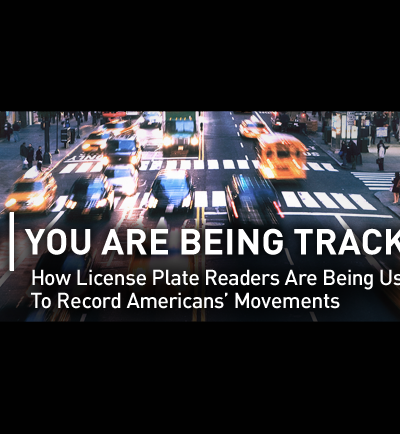
The feeling of freedom that comes from driving down California's sunny open roads is at risk—and rising gas prices are not to blame. Our investigations show that at least twenty Northern California law enforcement entities as well as the California Highway Patrol track the whereabouts of millions of Californians using automated license plate readers (ALPR), and some apparently even share records with a "fusion center" connected to the federal intelligence community.
AT&T Wants Us to Pay Them With Our Money And Our Privacy - How to Opt Out
I received an email from AT&T today. Did you? It turns out that AT&T is revising its privacy policy to make it "easier to understand" and by the way, also to let us know that they want us to pay them with our money and our privacy, too. Unless we opt out, the company is going to start selling information about where we go, what we search for, what apps we use, and what we watch, to other businesses. On top of that, they want to send us advertisements based on our location, too.

ACLU Sues Government for Information About "Stingray" Cell Phone Tracking
Today, the ACLU of Northern California filed a Freedom of Information Act lawsuit against the Department of Justice to find out more about the federal government's use of a sophisticated surveillance tool used to track people's cell phones and commonly known as a "stingray."
Stay Informed
Sign up to be the first to hear about how to take action.
By completing this form, I agree to receive occasional emails per the terms of the ACLU’s privacy statement.
By completing this form, I agree to receive occasional emails per the terms of the ACLU’s privacy statement.