
News & Commentary
The ACLU of California is Working Toward Healthy & Safe Communities - Is Your Legislator?
When it comes to drugs, we should focus on the goals we agree on: protecting our kids, protecting public safety and preventing and treating drug abuse and addiction.

Drones on the Radar
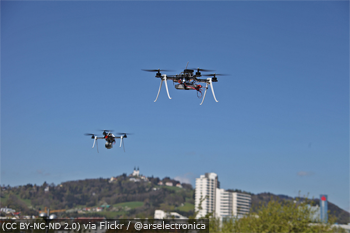
In the months since Alameda County Sheriff Gregory Ahern made known his desire to acquire and deploy a surveillance drone, the ACLU has consistently warned that such a plan carries serious privacy implications, that it is imperative the advertised benefits of a drone be weighed against the costs and that strict privacy safeguards be put into place to ensure that drones are not used for warrantless mass surveillance.
All Eyes on Alameda County
In response to an ACLU of Northern California Public Records Act request, the California Emergency Management Agency, the state entity that administers federal homeland security grant funds, recently confirmed that the Alameda County Sheriff's Office is the only agency in the entire state of California to have applied for or obtained grant funding from Cal-EMA for a drone.
Is All (Drone) Politics Local?
The next time a cop sees a picture of you, that picture may not have been taken by a person at all. Unmanned flying drones can allow their operators to remotely - and cheaply - monitor and record individuals, groups, or locations. These drones pose significant threats to privacy when police can use them to peer into homes or track an individual's actions from afar. While law enforcement agencies around the country, including, most recently, the Alameda County Sheriff's Office, are already expressing interest in acquiring drones, the federal government has done little to address privacy concerns - hardly surprising given that Congress is just now addressing decades-old privacy issues with electronic content such as email and cloud storage. We need to consider drone privacy protections now, and that means approaching these issues at the local and state level as well as pushing for federal drone privacy rules.
Alameda County Sheriff has Secret Plans to Unleash Surveillance Drone, Documents Show
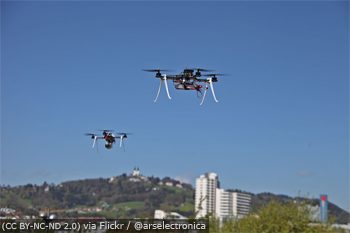
Buried on the Board of Supervisor's 66-item agenda for its December 4, 2012 hearing was a surprising request by the Alameda County Sheriff's Office for approval to "apply for, accept and administer" funds from the California Emergency Management Agency (Cal-EMA) to buy a drone.
Alameda County Sheriff: Too Busy Testing Drones to Tell You About Them
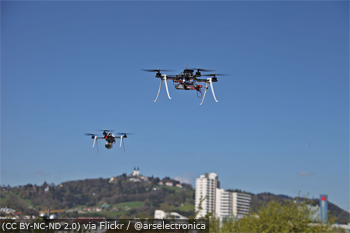
In mid-October, the Alameda County Sheriff's Office revealed that it was seeking funds to purchase a drone to engage in unspecified unmanned aerial surveillance. The ACLU of Northern California immediately sent a Public Records Act request seeking answers to three basic questions: 1) Are drones really necessary in our community; 2) How much will they cost to acquire, operate, and maintain; and 3) What safeguards will be in place to protect our privacy? The decision to buy a drone is a hugely important public policy question that needs to be debated through an open and transparent process, with full and informed participation by the community and our civilian elected leaders. This should not be a unilateral decision made by law enforcement. Unfortunately, while the Sheriff s Office has found the time to test a drone this past weekend, it is now dragging its feet in providing information that is responsive to our request and essential for that public debate to occur.
Incarcerated Without Trial: The Reality of Jail Overcrowding in California
As sheriffs have readily admitted, county jails are not full of individuals who have been convicted of crimes, or even individuals thought to present a high public safety risk to the community. Most people in county jails have not been convicted of a crime. More than 71 percent of the 71,000 Californians held in county jails on any given day are awaiting their day in court. Most of them do not pose a risk to public safety but are stuck behind bars because they simply cannot afford bail.
By ACLU of Northern California
Occupy and Oakland Police: One Year Later
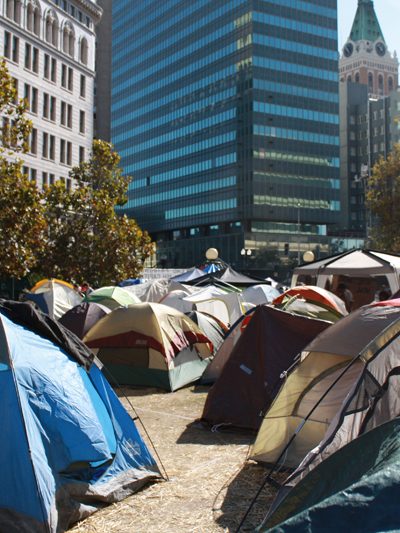
One year ago today, police fired tear gas, flash bang grenades and lead-filled bags into a massive crowd of Occupy Oakland demonstrators. The ACLU and the National Lawyers Guild sued the Oakland Police Department for its egregious constitutional violations against demonstrators during the October 25, 2011 and November 2, 2011 demonstrations. That lawsuit is ongoing.
Stay Informed
Sign up to be the first to hear about how to take action.
By completing this form, I agree to receive occasional emails per the terms of the ACLU’s privacy statement.
By completing this form, I agree to receive occasional emails per the terms of the ACLU’s privacy statement.