
News & Commentary
Shutting Down Cell Service During Protests: The Constitutional Dimension
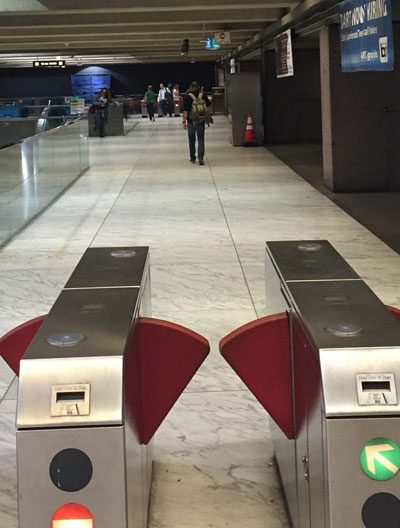
BART has a serious public relations problem. BART Police have been involved in three fatal shootings of passengers in the past three years, including the Oscar Grant incident in 2009, in which an unarmed African-American New Year's Eve reveler was shot in the back while lying face-down on a BART platform by a white police officer who later testified that he meant to use his taser, not his pistol. The shooting, and the controversial verdict in the criminal trial of the BART police officer, spurred widespread protests.
Faced with Opposition from Wireless Industry, CA Legislators Make the Wrong Call
The good news is that SB 1434, the important California privacy law that would make sure that police get a warrant before getting access to sensitive location information, passing its first hurdle and is moving onto a full vote by the California Senate.

Wireless Industry Admits: "Working Day and Night" to Hand Over Your Location Info to Police
Wireless companies are opposing an important new mobile privacy bill in California (SB 1434) because they say they are too busy "working day and night to assist law enforcement," so it would be too much of a burden to tell their customers how often and why they are turning over location data to law enforcement.
Location Information: Time for a Privacy Check-In
Location data from your cell phone or portable device can make it easy to get directions or locate the closest coffee shop. But that location data also says a lot about you – where you go, what you do, and who you know. And outdated privacy laws, written before GPS and other location-aware technologies even existed, mean that all this personal information isn't being properly protected from prying eyes. Don't pay for location-based services by giving up control of your personal information. Demand a privacy upgrade. Demand your dotRights!Wherever you go, companies may followYo
By ACLU of Northern California
Proposed Amendments to #CISPA Don't Protect Privacy
Yesterday, the House Intelligence Committee released proposed changes to the Cyber Intelligence Sharing and Protection Act of 2011, also known as CISPA that, according to its sponsors, represent "huge progress" towards addressing the privacy and internet freedom community's concerns.
By ACLU of Northern California
ACLU-NC and Bay Guardian File New FOIA to Uncover Local U.S. Attorney Demands for Location Info
The ACLU of Northern California (ACLU-NC) and San Francisco Bay Guardian (Bay Guardian) have filed a Freedom of Information Act (FOIA) request to try to uncover how United States Attorneys in the Northern District of California are seeking and accessing sensitive location data. (Read the FOIA request here)
Kicking off "Stop Cyber Spying Week"
The ACLU, along with several other groups, is launching a weeklong campaign called "Stop Cyber Spying Week" to draw attention to the massive civil liberties problems in H.R. 3523, the Cyber Intelligence Sharing and Protection Act of 2011, better known as CISPA. CISPA is scheduled to be voted on by the House of Representatives next week.

California Location Privacy Act of 2012
The California Location Privacy Act (SB 1434) authored by State Senator Mark Leno (D-San Francisco) and co-sponsored by the ACLU of California and the Electronic Frontier Foundation updates California privacy law to reflect the modern mobile world by providing needed protection against warrantless government access to a person's location information.
By ACLU of Northern California
Stay Informed
Sign up to be the first to hear about how to take action.
By completing this form, I agree to receive occasional emails per the terms of the ACLU’s privacy statement.
By completing this form, I agree to receive occasional emails per the terms of the ACLU’s privacy statement.