
News & Commentary
Making Things a Little Fairer in California, One Bill at a Time
California now has some of the strongest protections against policing for profit in the country. Although we had several legislative successes this year, two important, ACLU-sponsored bills died in the Legislature.
Government of the People, By the People, and for the People
In the 2010 Citizens United decision, the US Supreme Court ruled that independent political expenditures by corporations and unions are protected speech. Citizens United became a flashpoint because Americans are increasingly concerned about the impact of economic inequality on our political system.

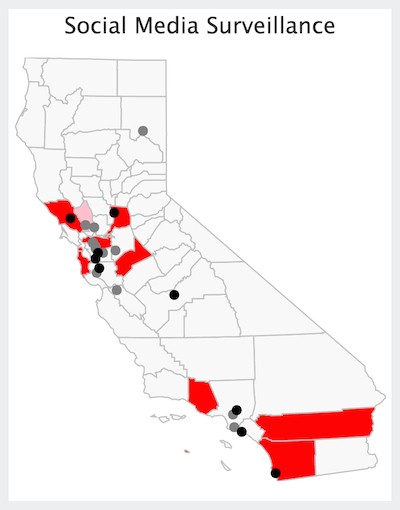
Police Use of Social Media Surveillance Software is Escalating, and Activists are in the Digital Crosshairs
It goes without saying that speaking out against police violence or government overreach shouldn’t land you in a surveillance database. But it can, and it does.The ACLU of California has
It's Time to Shine a Light on Police Surveillance in Fresno
When you are having meetings about transparency and building trust with law enforcement, the last thing you expect to hear is that they may be secretly spying on you. But that is exactly what happened to us as community activists with Fresno Faith In Community/Live Free.
Interrupting Surveillance in Silicon Valley and Beyond
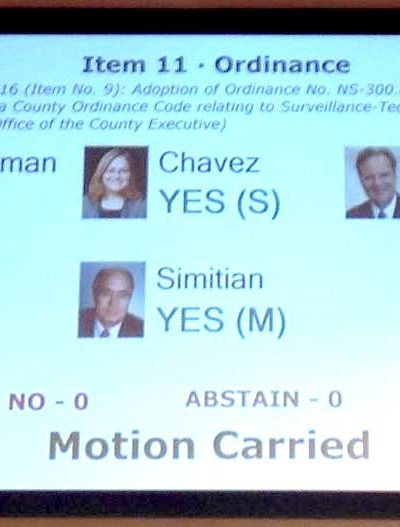
Public cynicism about government is at an all-time high – and we all know the reasons. That's why it's pretty remarkable when activists use public government processes to attack a scary and overwhelming problem like surveillance – and it works.
How the Fight to Stop Oakland's Domain Awareness Center Laid the Groundwork for the Oakland Privacy Commission
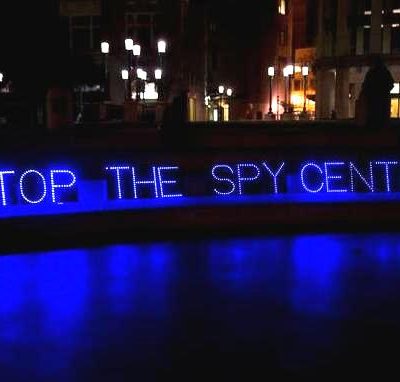
When Edward Snowden blew the whistle on the NSA in 2013, I didn’t yet know that my own city of Oakland had futuristic surveillance problems of our own. Oakland had quietly embarked on a path towards building a city-wide surveillance network called the Domain Awareness Center (DAC), comprised of over 700 cameras throughout schools and public housing, facial recognition software, automated license plate readers (ALPRs), and 300 terabytes of storage for all the data they anticipated collecting on Oakland residents.
UPDATE: L.A. County School Districts Improve Lactation Accommodations Policies for the New School Year
School is back in session, and by now, many students and teachers have returned to their classrooms to new and improved lactation accommodations policies.

UC Berkeley Just Reinstated A Course on Palestine. It Should Have Protected Free Speech From the Start.
It’s a victory for free speech and academic freedom – but Cal’s move to cancel the course for no good reason should never have happened in the first place.
California is One Signature Away From Reining in Policing for Profit
Throughout the nation, police officers are legally allowed to take and keep your cash and property - even if you are never charged or arrested for a crime. All it takes is officers claiming they think your belongings were obtained through illegal means.

Stay Informed
Sign up to be the first to hear about how to take action.
By completing this form, I agree to receive occasional emails per the terms of the ACLU’s privacy statement.
By completing this form, I agree to receive occasional emails per the terms of the ACLU’s privacy statement.