
News & Commentary
Records Reveal ICE Agents Run Thousands of License Plate Queries a Month in Massive Location Database

Your Personal Information is Yours, Not the Raw Material for Surveillance Technology
The information that you share with a company should not be repurposed or sold without your consent. But companies are building algorithms from massive repositories of personal information, collected from people who are not told about how the company will use their information.
A recent report revealed a troubling example of this invasive practice. A Silicon Valley-based company called Ever apparently used billions of private photos they collected from their users to secretly train a face surveillance tool marketed to the military and law enforcement.

No One Should Have to Travel in Fear
I’ve worked for Silicon Valley companies for more than a decade and international travel is a necessary part of my job. I’ve had my fair share of delays and missed connections, but one thing I’ve never experienced while traveling in airports is fear. That changed last December when I returned from a business trip to Europe.
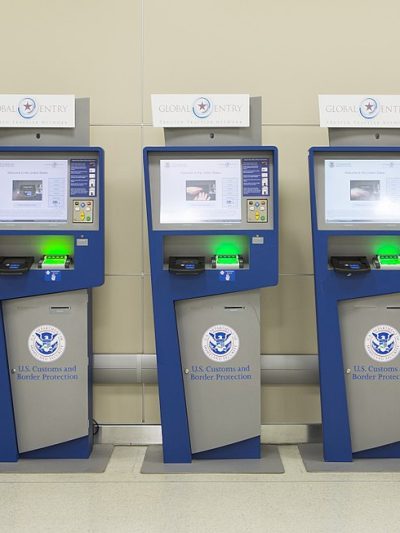
Going through customs is usually routine for me. I signed up for the Global Entry program years ago. It allows me to bypass lines using an electronic kiosk. With my travel schedule, Global Entry is a necessity.
Will California lawmakers vote to protect Californians’ privacy or tech industry profits?
By Jacob Snow
The FBI Won’t Hand Over Its Surveillance Records on ‘Black Identity Extremists,’ so the ACLU and CMJ are Suing

Facebook Settles Civil Rights Cases by Making Sweeping Changes to Its Online Ad Platform
The ACLU, along with our client Communications Workers of America and other civil rights groups, announced a historic settlement agreement with Facebook that will result in major changes to Facebook’s advertising platform. Advertisers will no longer be able to exclude users from learning about opportunities for housing, employment, or credit based on gender, age, or other protected characteristics.
This policy change follows years of work by civil rights advocates — including a legal challenge from the ACLU, the Communications Workers of America, and the civil rights law firm Outten & Golden LLP. In September, we collectively filed charges with the Equal Employment Opportunity Commission on behalf of CWA and individual job seekers against Facebook and a number of companies that targeted certain ads for jobs to younger male Facebook users. These charges joined other litigation asserting race discrimination in job, housing, and credit ads and age discrimination in job ads.
By Galen Sherwin

Documents Reveal ICE Using Driver Location Data From Local Police for Deportations
UPDATE: The Union City Police Department informed the ACLU that it does not operate license plate cameras and has no license plate detection data to share with ICE. Union City provided a recent sharing report and screenshots showing that ICE is not listed as a sharing partner and that Union City has not contributed “detections” data to the LEARN database.
U.S. Immigration and Customs Enforcement is using mass location surveillance to target immigrants. And local governments like Merced and Union City, California, are helping — feeding their residents’ personal information to ICE, even when it violates local privacy laws or sanctuary policies. Today, the ACLU is urging an immediate end to this information sharing.

Amazon, Google, and Microsoft Are at Odds on the Dangers of Face Recognition. One of Them Is on the Right Path.
A top Google executive recently sent a shot across the bow of its competitors regarding face surveillance. Kent Walker, the company's general counsel and senior vice president of global affairs, made it clear that Google — unlike Amazon and Microsoft — will not sell a face recognition product until the technology's potential for abuse is addressed.
Face recognition, powered by artificial intelligence, could allow the government to supercharge surveillance by automating identification and tracking. Authorities could use it to track protesters, target vulnerable communities (such as immigrants), and create digital policing in communities of color that are already subject to pervasive police monitoring.

The FBI ‘Can Neither Confirm nor Deny’ That It Monitors Your Social Media Posts
In recent years, the federal government has significantly ramped up its efforts to monitor people on social media. The FBI, for one, has repeatedly acknowledged that it engages in surveillance of social media posts. So it was surprising when the bureau responded to our Freedom of Information Act request on this kind of surveillance by saying that it “can neither confirm nor deny the existence of records.”

Stay Informed
Sign up to be the first to hear about how to take action.
By completing this form, I agree to receive occasional emails per the terms of the ACLU’s privacy statement.
By completing this form, I agree to receive occasional emails per the terms of the ACLU’s privacy statement.