
News & Commentary
Federal Court Calls Trump’s Threats to Defund Sanctuary Cities Unconstitutional
For months, the Trump administration has tried to bully local communities into signing up to become extensions of the federal deportation system. That campaign of threats and public shaming based on flawed data — which has been mostly unsuccessful — suffered another major blow yesterday. A federal court in San Francisco ruled in two cases that the president’s threats were unconstitutional, and stopped the government from carrying them out anywhere in the country. The ruling vindicates the constitutional rights of cities, counties, and states to refuse to participate in deportations. And like the court orders halting the president’s Muslim ban, the ruling shows the crucial role that courts play in preventing presidential overreach.
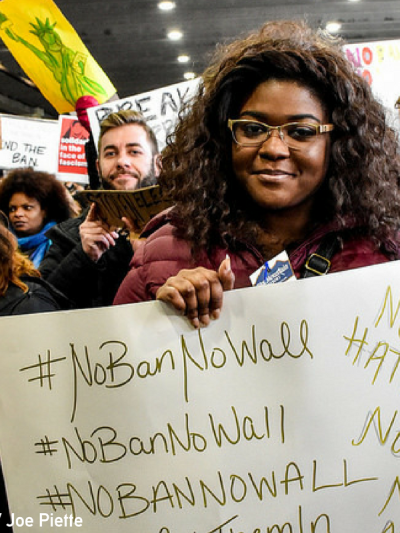
Lawyers for Immigrants: Why California Must Lead the Way
Did you know that California pioneered the public defender system in the early 1900s? It's time for our state to step up again.
Freedom Shouldn't Depend on Your Bank Account Balance
California incarcerates thousands of people while they await their court dates - simply because they can’t afford to post bail. Meanwhile, wealthy people can easily buy their freedom.
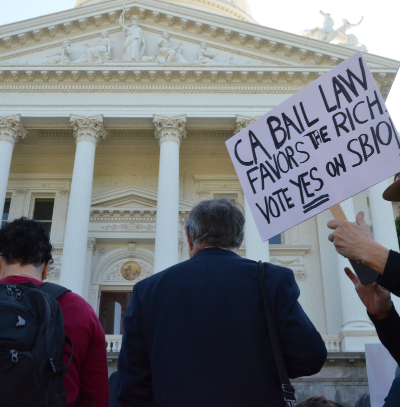
A Dangerous Trend: Immigration Arrests at State Courthouses Are on the Rise
One disturbing new trend is the increase in immigration arrests at state courthouses across the country. Beyond posing public safety dangers, these arrests also threaten our constitutional rights.

California Could Soon Disentangle Itself from Trump's Mass Deportations
Two weeks ago, a mother of two was driving to church when local police pulled her over. The officer issued a fix-it ticket and within 30 minutes, immigration officers were at her door to deport her. She is now living in hiding.

In California, We the People Can Protect Our Values and Each Other
While California already has many great laws in place, there's much work to do for civil rights and civil liberties – especially now as the Trump Administration begins its attack on the most vulnerable among us.
#ACLUTimeMachine - Five Years Gone: It’s Time to #TalkAboutTrayvon
Knowing Trayvon Martin's story, and the history of the struggle against racial profiling, helps us to free ourselves from the myths of racism.

Trump Has the Keys to the Surveillance State, but CA has a Long History of Changing the Locks
When Donald Trump takes the oath of office, he will inherit an unprecedented surveillance state that includes expansive powers and databases filled with information on millions of people.
Twitter Cuts Off Fusion Spy Centers’ Access to Social Media Surveillance Tool
As of this week, Twitter has made sure that federally funded fusion centers can no longer use a powerful social media monitoring tool to spy on users. After the ACLU of California discovered the domestic spy centers had access to these tools, provided by Dataminr (a company partly owned by Twitter), Dataminr was forced to comply with Twitter’s clear rule prohibiting use of data for surveillance.
Stay Informed
Sign up to be the first to hear about how to take action.
By completing this form, I agree to receive occasional emails per the terms of the ACLU’s privacy statement.
By completing this form, I agree to receive occasional emails per the terms of the ACLU’s privacy statement.