
In the political and social climate we currently live in, it is inconceivable that a bipartisan Congress would pass a law, signed by the president, that has at its core humanitarian concern for immigrants. Yet, this simple principled value led to the 1990 law creating Temporary Protected Status (TPS), the program that has been one focal point of our immigrants’ rights work since President Donald Trump returned to office with a vengeance to dismantle it.
TPS was designed to give relief to immigrants already in the United States who could not safely return to their home countries due to ongoing armed conflict, environmental disasters, or other life threatening and dangerous conditions. Since its inception, TPS provided protection from detention and deportation, authorization to work and, with some stipulations, the ability to leave and reenter the United States.
With these protections, the lives of millions have been saved and spared from war, disaster, and catastrophe. In turn, communities across the U.S. have benefited from myriad contributions from TPS holders. As of March 2025, over one million people from 17 countries were TPS recipients. All, except Ukraine, represented countries inhabited by people who would be colloquially called “people of color” or non-Christian—a significant observation in the telling of this story.
During Trump’s first term in office, an explicit goal of his administration was to end TPS designations for most of the protected countries as part of his overall xenophobic immigration agenda. These efforts were successfully thwarted by the TPS holders we represented, along with our co-counsel ACLU SoCal, the National Day Laborer Organizing Network (NDLON), and the law firm of Sidley Austin LLP.
After re-election, the Trump administration was further emboldened. Project 2025, the playbook that fine-tuned the incoming administration’s nefarious immigration strategies, targeted the mass deportations of immigrants, even those with lawful status like TPS holders.
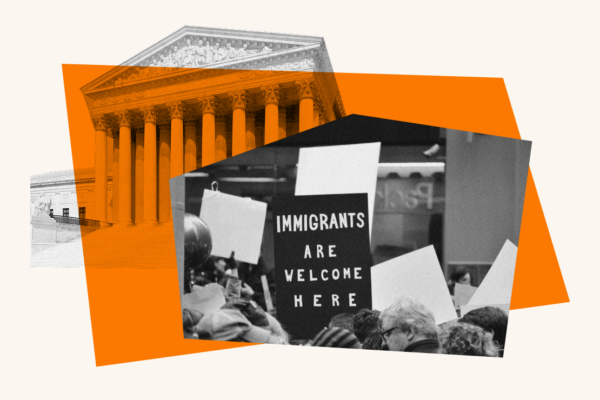
On April 29, a stand-off between values of inclusivity vs. exclusivity came to a crescendo at the Supreme Court. ACLU NorCal joined the International Refugee Assistance Project (IRAP), Muslim Advocates, Van Der Hout LLP, NDLON, the UCLA Miñana Center for Immigration Law and Policy, and the National ACLU as co-counsel on Mullin v. Dahlia Doe, which challenged the Trump administration’s decision to terminate TPS for thousands of Syrian immigrants living and working legally in the United States while their country is at war. The court fast-tracked that case and combined it with Trump v. Miot, a second lawsuit contesting the termination of TPS for over 350,000 Haitians.
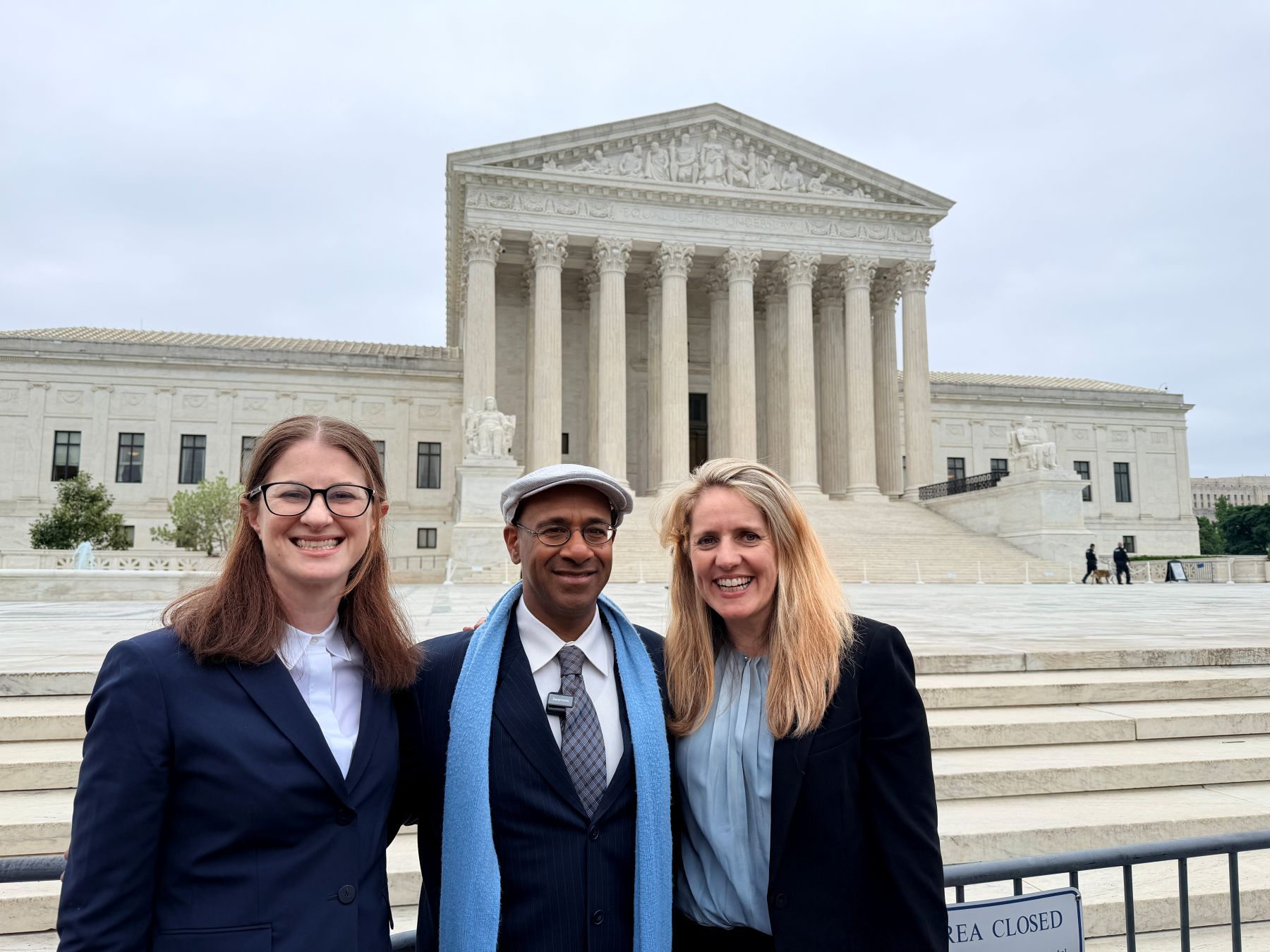
Key members of the legal team (left to right): Jessica Bansal from National Day Laborer Organizing Network, Ahilan Arulanantham from Miñana Family Center for Immigration Law and Policy at UCLA School of Law, and Emi MacLean from ACLU NorCal.
With short notice the legal team led a herculean effort to build the strongest case possible, defending the legal and constitutional rights of TPS holders. The lived experience of TPS holders was before the court and underscored the unconscionable toll it would take on them if the government prevailed in dismantling TPS.
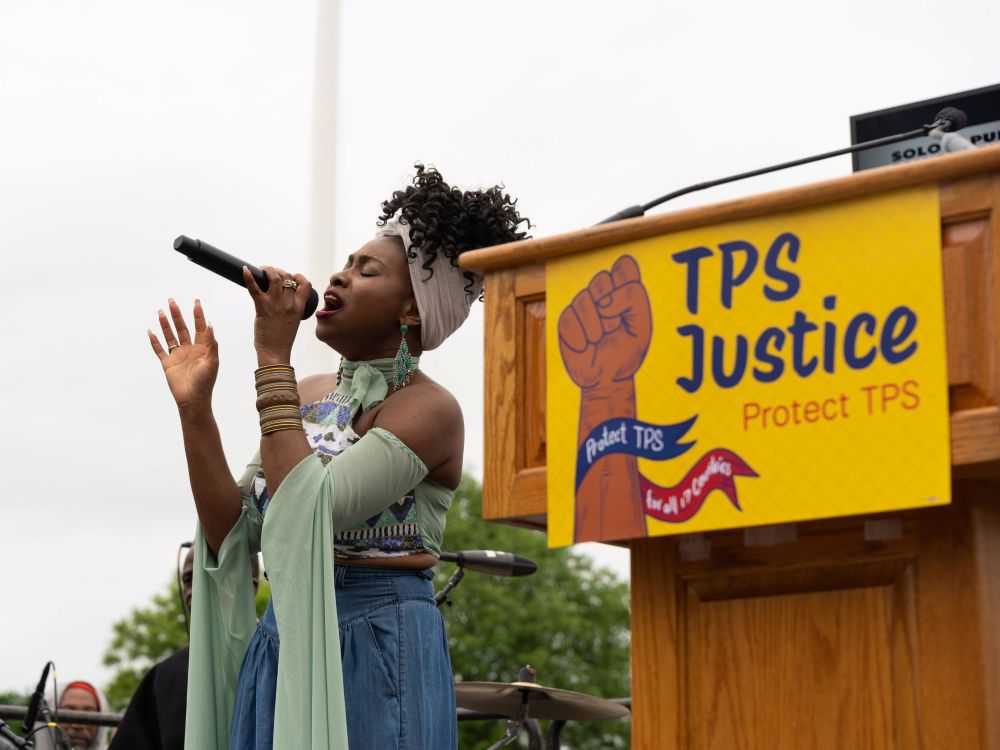
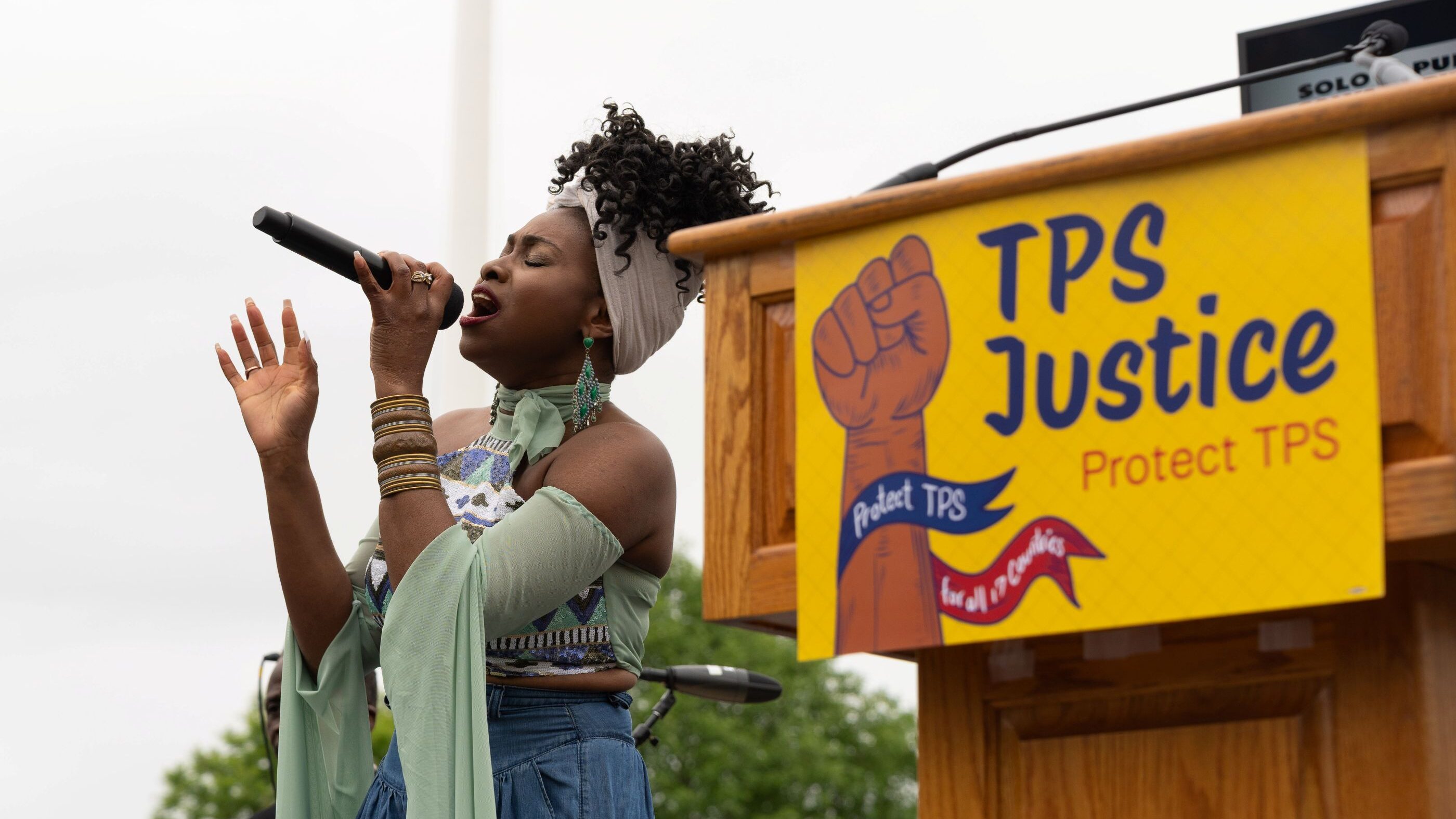
Hours before oral argument began on that cold and windy April morning, TPS holders from the 17 countries in jeopardy gathered outside the Supreme Court in a display of solidarity with one another. Music and song filled the air as if to permeate the court’s concrete and marble edifice and support the attorneys inside who had the enormous responsibility of pleading their case. But, despite a solid strategy and masterful effort by legal counsel and advocates, on June 25, in a 6-3 ruling, the Court sided with the Trump administration’s position allowing the TPS terminations of Syria and Haiti to go forward. The Supreme Court limited judicial oversight of violations of the TPS law. The lopsided majority decision also ignored Trump’s clearly racist statements about Haitian TPS holders and held that there was insufficient evidence to prove that the termination of Haiti’s TPS designation violated the Constitution’s prohibition against race discrimination. While the ruling directly affects only Haitian and Syrian TPS holders, it will impact all 1.3 million individuals from 17 countries designated for TPS.
By contrast, it is essential to remember that over 6,000 white South African Afrikaners have been given the red carpet, carte blanche invitation to the United States as refugees under patently false and racist pretenses. This immigration policy apparently supports the whitening of America, the government’s monochromatic vision for the racial composition of this country.
As of this writing, the U.S. Department of Homeland Security is seeking to expedite the effective date of this order. TPS holders from Haiti and Syria are expected to lose their right to work in the coming days. Work permits for Venezuelan, Nicaraguan, Honduran, Nepali, Afghan, and Cameroonian TPS holders have already expired; some have already been deported. In the coming months, work permits and legal status also may lapse for people from Ethiopia, Myanmar (Burma), Somalia, South Sudan, and Yemen. The immediate results will be a crisis of unknown proportions as families lose income earners, and individuals and businesses are put at risk in numerous ways. Thousands will be in danger of deportation and detention, in the largest de-documentation event in U.S. history. Deportees to most of these countries will face imminent danger. “SCOTUS has left a stain on the court and the country,” ACLU NorCal Senior Staff Attorney Emi MacLean said. “But the fight is not over.”
While we continue to advocate in court, we also turn to Congress. Each of us can call on Congress to enact immigration reform that offers a path to permanent legal status for TPS holders who are now at grave risk. Congress introduced the Safe Environment from Countries Under Repression and Emergency Act (S. 2106) to provide TPS recipients with a pathway to lawful permanent residence and shield them from deportation. The American Dream and Promise Act (H.R. 1589) in the House also aims to provide a pathway to citizenship for DACA and TPS recipients.
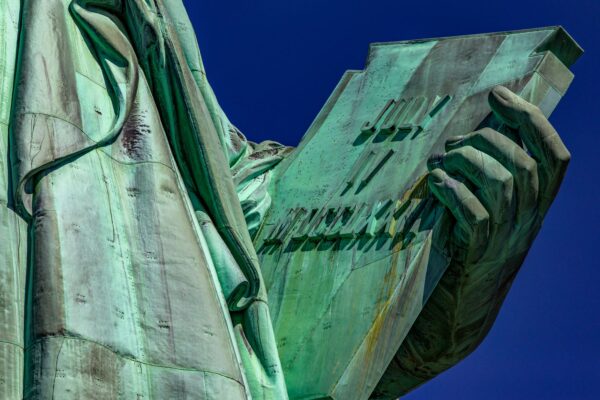
This month, as Americans celebrated 250 years since the country was established and congratulated themselves for building a democracy, let’s not make a mockery of the invitation from Lady Liberty that sits on the Hudson River in New York:
Give me your tired, your poor,
Your huddled masses yearning to breathe free,
The wretched refuse of your teeming shore.
Send these, the homeless, tempest-tost to me,
I lift my lamp beside the golden door!